Wisconsin patios face rain, snow, ice, repeated freezing and thawing, and the seasonal movement that comes with changes in soil moisture and temperature. Those conditions put stress on any hardscape, whether the surface is concrete or pavers.
That is why choosing between a paver patio and a concrete patio in Wisconsin means weighing the construction underneath, along with colors, patterns, and the initial price. Proper excavation, a well-prepared aggregate base, appropriate drainage, and correct installation techniques all play a major role in how a patio performs over time.
So which option makes more sense for a Wisconsin home? The answer depends on your priorities, and understanding how each material responds to Wisconsin’s climate is the best place to start.
The basic cycle is straightforward:
Moisture → freezing → thawing → ground movement
When water enters the soil beneath a patio, freezing temperatures can cause that moisture to expand. As temperatures rise, the ground thaws again. This process can contribute to movement beneath hardscape surfaces, especially when drainage or soil conditions are not properly addressed.
Wisconsin sees significant seasonal temperature swings, which makes freeze-thaw conditions an important consideration for outdoor construction.
The surface material is one part of the equation. A patio can have high-quality pavers and still experience problems if the base was not properly prepared. Likewise, a concrete patio’s performance depends heavily on its subgrade, base, drainage, reinforcement, thickness, and installation.
For homeowners, the more useful question to ask is:
“Which patio system, installed correctly for this property and climate, best fits how I want to use the space?”
| Factor | Paver patio | Concrete patio |
|---|---|---|
| Upfront investment | Often higher | Often lower |
| Appearance | Wide range of colors, textures, patterns, and shapes | Broad range of finishes, colors, and stamped patterns |
| Design flexibility | High | High, especially with poured and stamped designs |
| Freeze-thaw performance | Individual units can accommodate some movement and can be reset | Rigid surface can crack when movement occurs |
| Cracking | Individual pavers can crack or break, with damage usually limited to those units | Cracks can develop across the slab |
| Settling | Individual areas can be lifted and reset | Slab may need repair, replacement, or lifting depending on the problem |
| Repairs | Individual pavers can often be replaced | Matching an existing slab repair can be difficult |
| Drainage | Depends on design and installation; permeable systems offer additional drainage options | Requires proper grading and drainage design |
| Maintenance | Routine cleaning and occasional joint maintenance | Cleaning, crack maintenance, and potential sealing |
| Snow and ice | Requires appropriate snow-removal practices | Similar winter maintenance considerations |
| Long-term appearance | Individual pavers can be replaced to refresh damaged areas | Repairs can remain visible |
| Lifespan | Can provide decades of service when properly installed | Can also provide decades of service with proper installation and maintenance |
| Pool integration | Excellent for customized pool decks and transitions | Also widely used around pools |
The table gives a useful overview. The biggest difference shows up in what happens when the patio moves or needs repair.
A poured concrete patio creates one large, rigid surface.
Expansion and control joints are built into concrete construction to help manage movement and control where cracking occurs. Concrete can still develop cracks when the supporting soil moves, water-related problems occur, or the material experiences stresses beyond what the system can accommodate.
In Wisconsin, this is one of the main things homeowners should understand. Cracks are a common concern with concrete patios, and a properly designed and installed concrete patio can still last for many years. Once a crack develops, though, repairing it without leaving some evidence of the repair can be challenging.
A paver patio is assembled from individual pieces installed over a prepared base, and that construction method gives the surface a different way of responding to movement. If a small area settles or shifts, the affected pavers can be removed, the underlying base corrected, and the pavers reinstalled. That is a very different repair from a crack running through a continuous concrete slab.
The distinction is especially relevant in Wisconsin, because seasonal ground movement is one of the realities an outdoor hardscape has to accommodate.
It is easy to focus on the visible surface. The paver pattern or concrete finish is what homeowners see, and the materials underneath are doing much of the work.
A properly constructed patio typically involves:
The exact construction method depends on the property, soil, intended use, and selected materials.
The important principle is that a patio is a complete system, from the soil up.
If water collects beneath the patio, or the base is not properly compacted, movement can occur whether the surface is pavers or concrete. That is one reason experienced hardscape installation matters.
Water is one of the biggest considerations in patio design. A patio needs to direct water away from the home and keep unwanted water from collecting beneath or around the hardscape.
The surrounding landscape matters, too. A patio next to a house, retaining wall, pool, or sloped lawn may need a different drainage strategy than a patio on a relatively flat, open property. That is especially important during spring thaw and periods of heavy rain, when saturated soils can create challenging conditions.
Good patio design considers:
A beautiful patio with poor drainage can become an expensive problem later.
Concrete generally has the advantage when homeowners are looking strictly at initial installation cost. Pavers can require more labor and more individual material handling, which can mean a higher upfront investment.
The initial price is one number among several. A patio is a long-term feature, and the cost of future repairs, maintenance, replacement, and changes to the surrounding landscape all affect the overall value of the installation.
If a section of a paver patio settles several years after installation, for example, that section can potentially be removed and rebuilt. With concrete, a localized problem may require a different repair approach, and matching the existing slab’s color and finish can be difficult.
The best value comes from weighing the full lifetime of the patio along with the initial price.
Both materials offer substantial design possibilities.
Pavers are available in numerous:
That makes it possible to create a patio with distinct areas or visual transitions. A paver patio can also be coordinated with walkways, pool coping, retaining walls, steps, and other hardscape elements.
Concrete can also be customized through:
Concrete can provide a clean, contemporary appearance and works especially well for homeowners who prefer a large, uninterrupted surface.
Since both materials offer plenty of options, the deciding factor is which visual language fits the property and the rest of the outdoor living design.
This is where pavers can offer a practical advantage. Imagine that a portion of your patio settles after several Wisconsin winters. With a paver system, the affected section can be taken apart, the underlying base corrected, and the pavers reinstalled. Individual damaged pavers can also be replaced.
Concrete repairs work differently. If a slab develops a crack, there are several possible repair approaches depending on the cause and severity, and replacing a section of concrete can leave a visible difference between old and new material.
Concrete can absolutely be repaired. The key is understanding that repairability looks different between the two systems, and for a long-term outdoor living investment, that distinction can be important.
Both concrete and pavers need appropriate winter maintenance. Snow removal equipment and deicing products can affect outdoor surfaces, so homeowners should follow the recommendations for their particular paving material. Winter maintenance is worth considering when choosing and installing the patio.
A patio should also be designed with winter drainage in mind. Water that sits on or beneath the surface can become an issue when temperatures repeatedly cross the freezing point. The goal is a system that keeps performing through year after year of seasonal cycles.
One difference homeowners often notice over time is how repairs affect the look of the patio. Pavers have a practical advantage here because individual units can often be replaced. If a paver becomes stained, damaged, or otherwise needs attention, it can potentially be removed and replaced while the rest of the patio stays in place.
With concrete, the entire slab is visually connected, so a repair may be more noticeable, especially if the existing concrete has weathered, faded, or developed a patina over time. That can make pavers appealing to homeowners who want a patio that can be maintained and updated in sections.
Every patio’s lifespan depends on its own conditions. Installation quality, soil conditions, drainage, climate exposure, maintenance, and usage all affect longevity.
A properly installed paver patio can provide decades of service. Concrete can also last for decades when properly designed, installed, and maintained.
Even a long-lasting patio will see some change over the years. Wisconsin’s freeze-thaw cycles, snow removal, settlement, moisture, and everyday use can eventually affect any outdoor surface. The advantage of a well-designed paver system is that localized problems can often be addressed without replacing the entire surface.
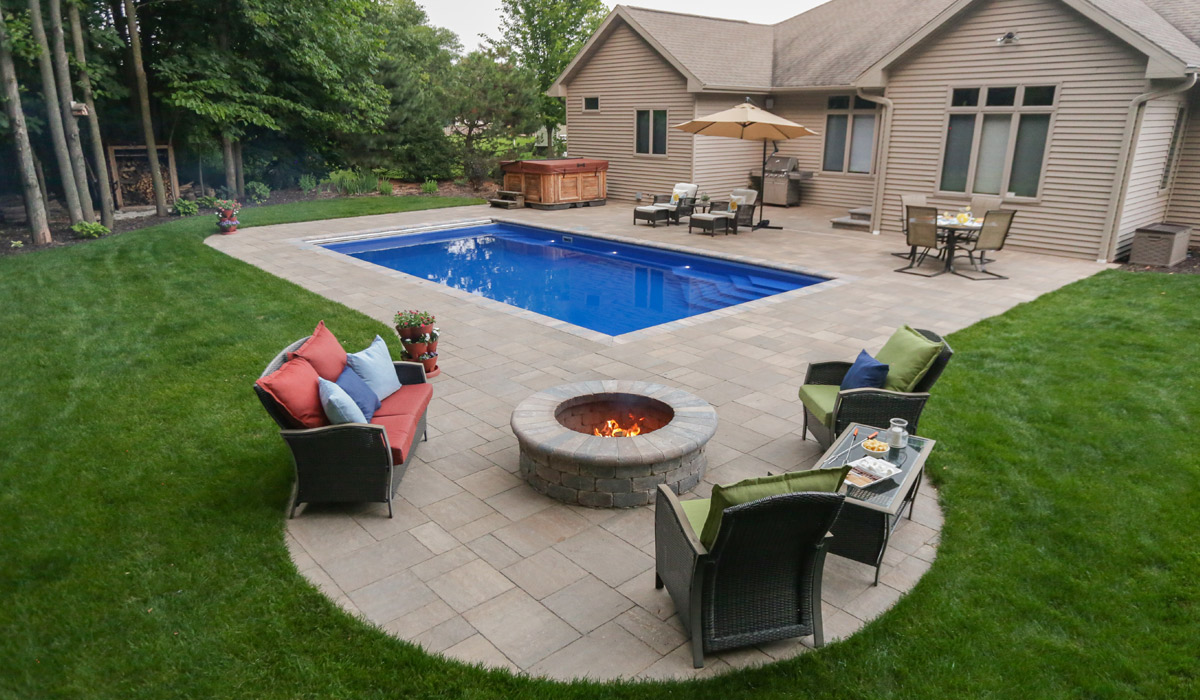
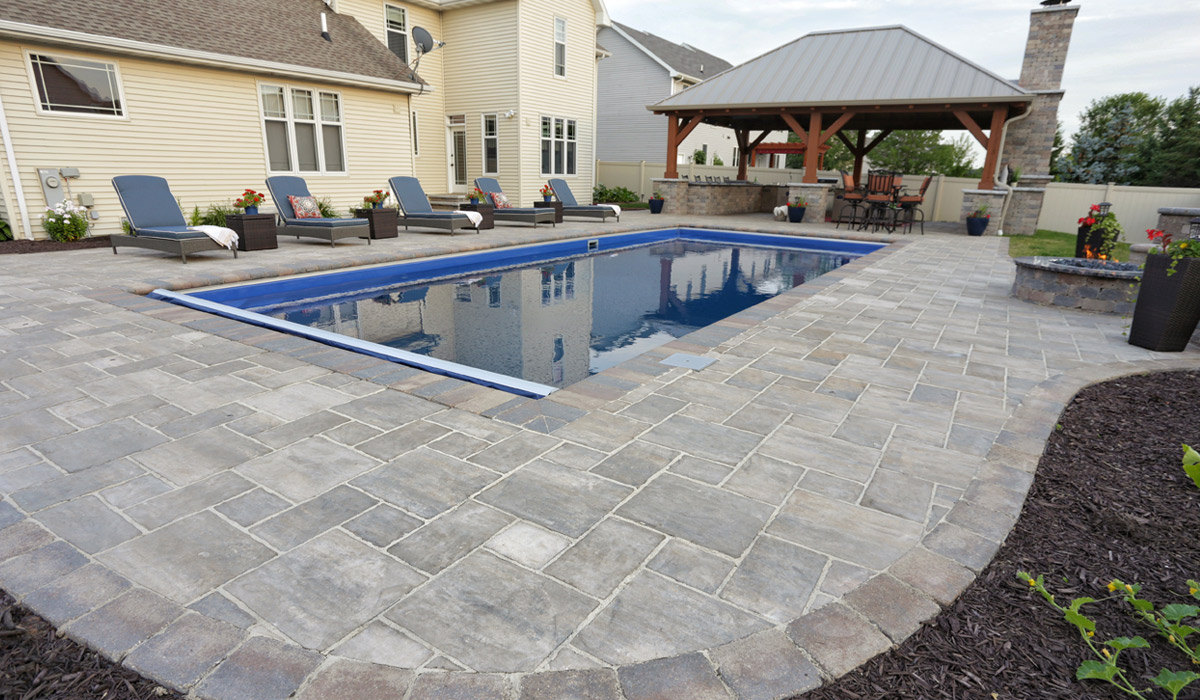
Pavers are especially useful when a patio is designed as part of a larger outdoor living space. Consider a backyard that includes:
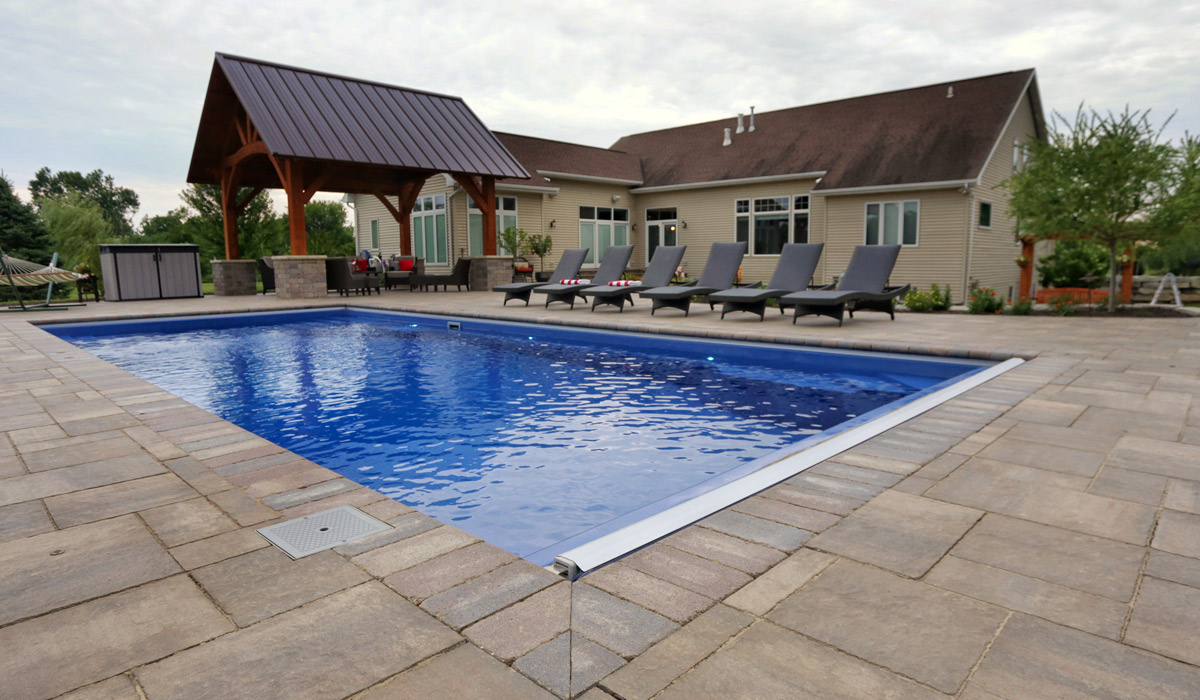
In that environment, the patio connects everything. Pavers can create transitions between the pool and the other outdoor spaces while varying patterns, borders, and colors along the way.
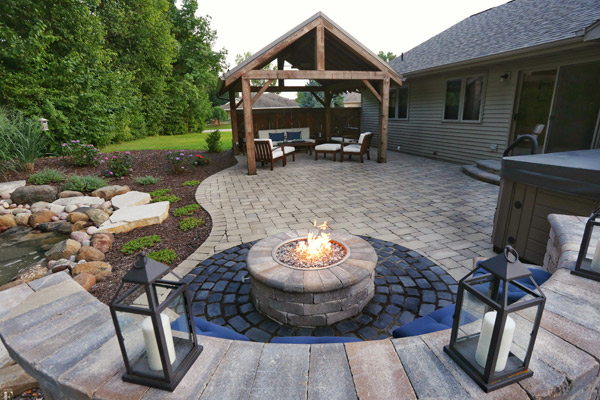
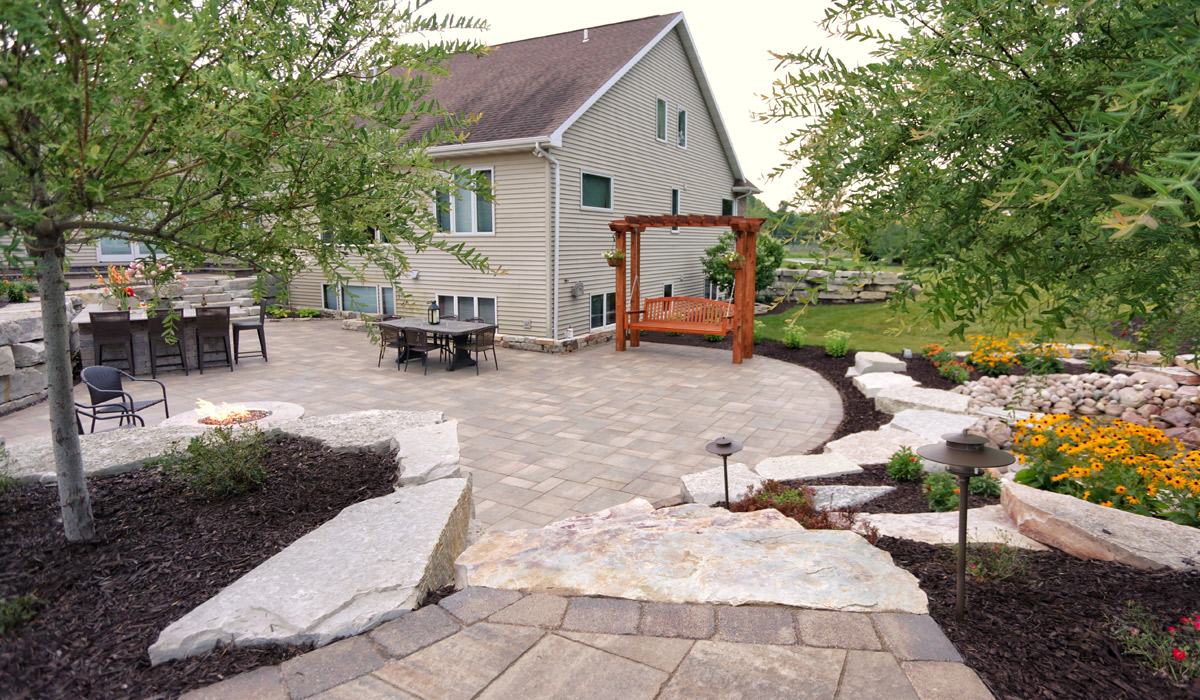
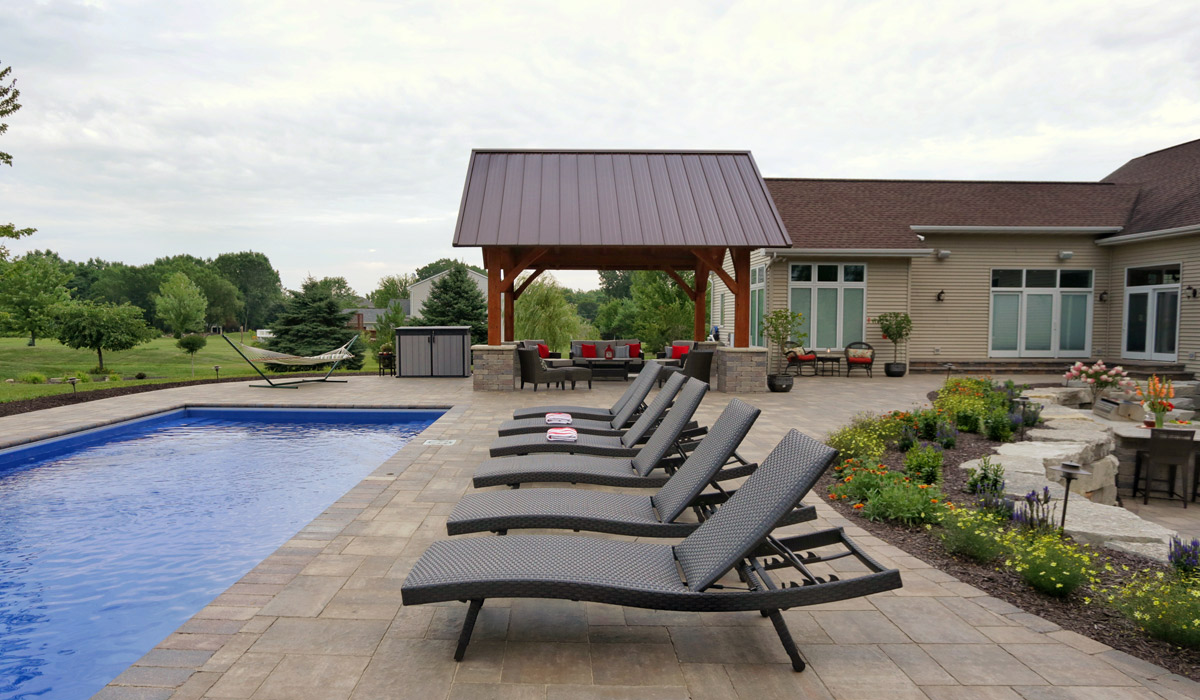
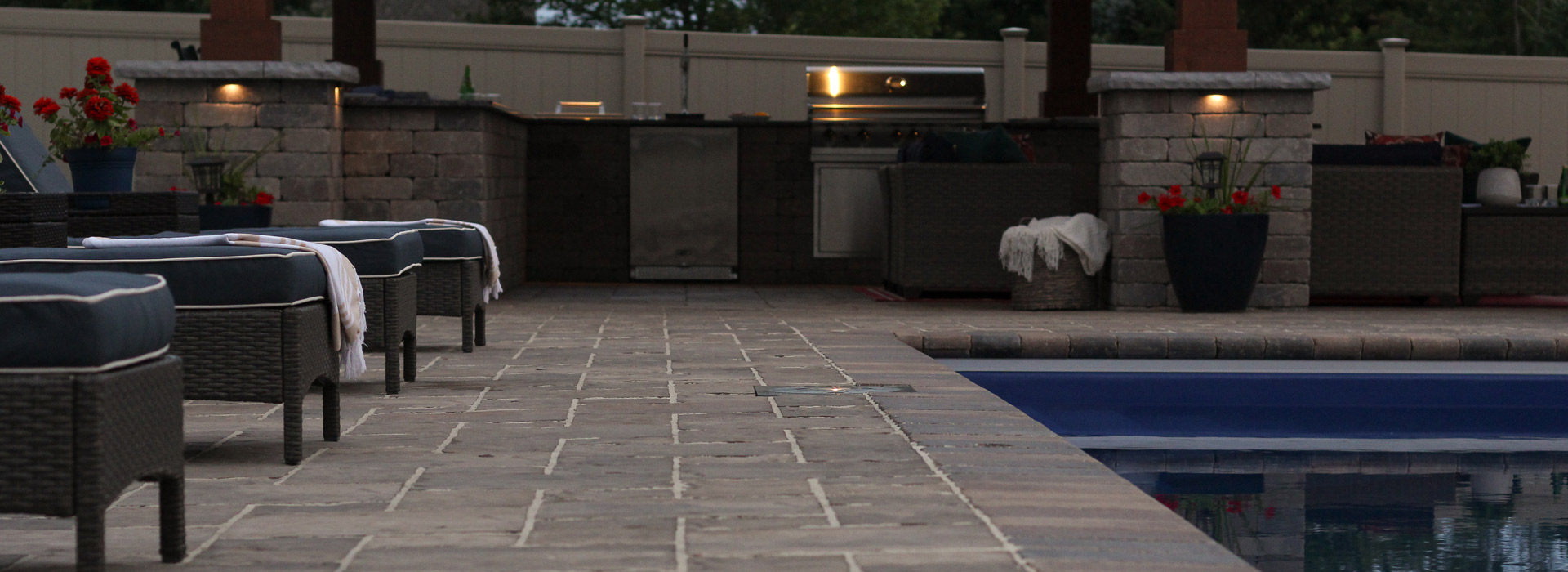
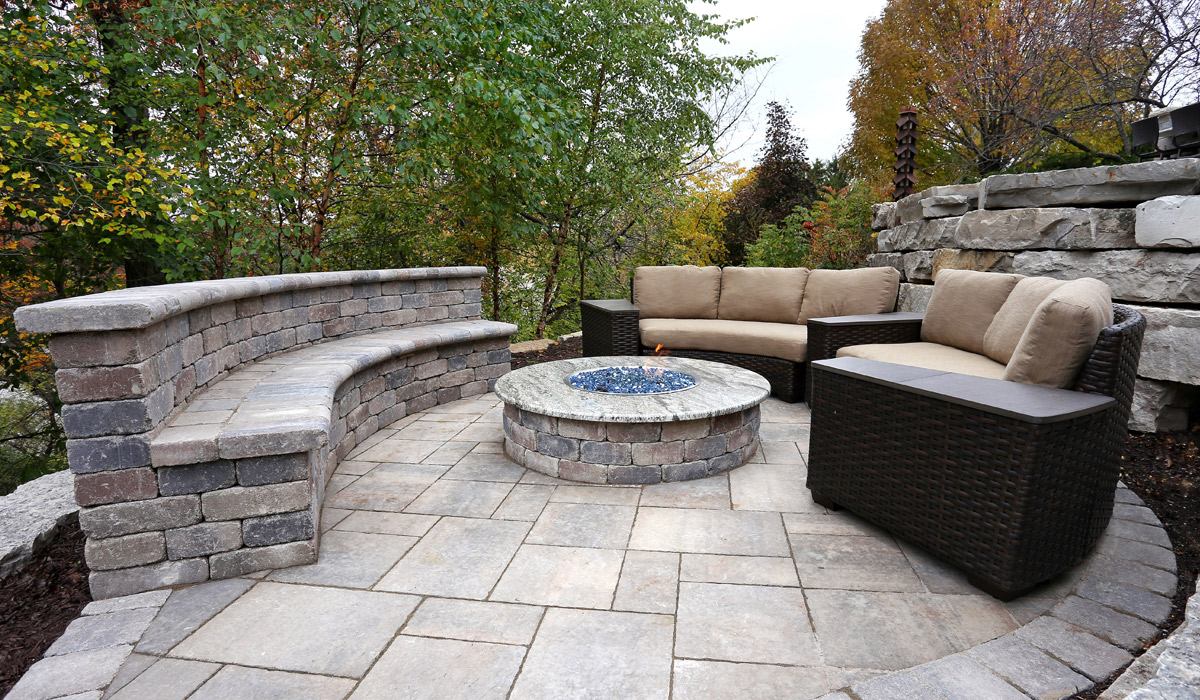
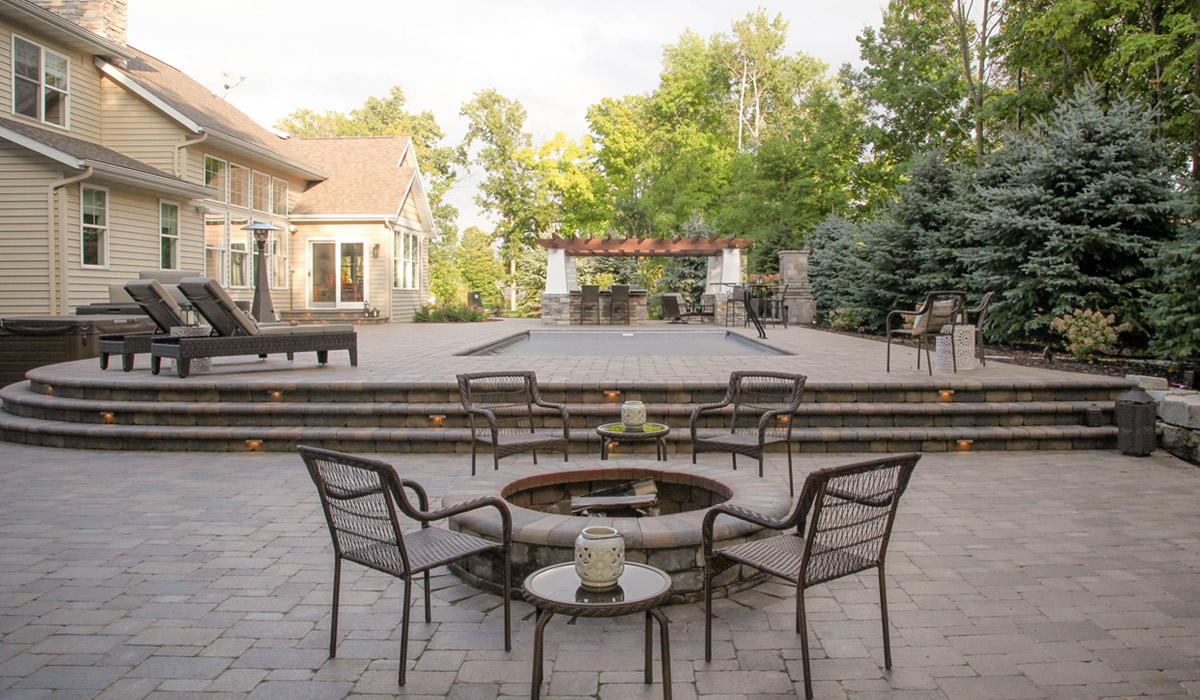
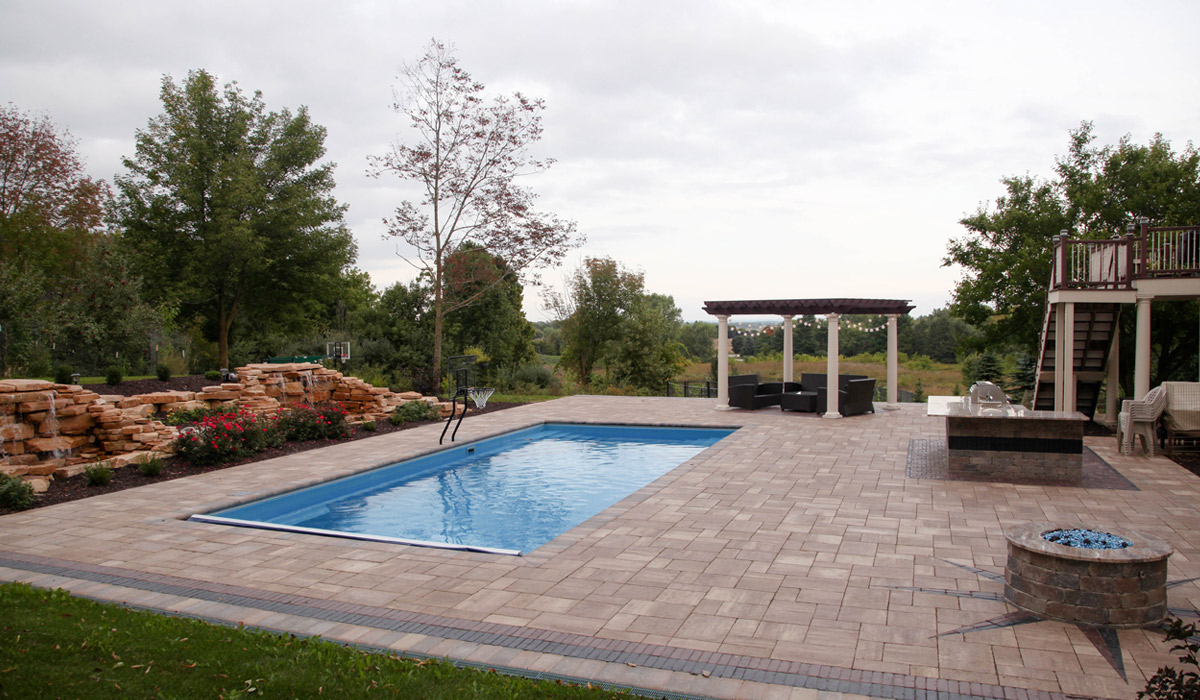
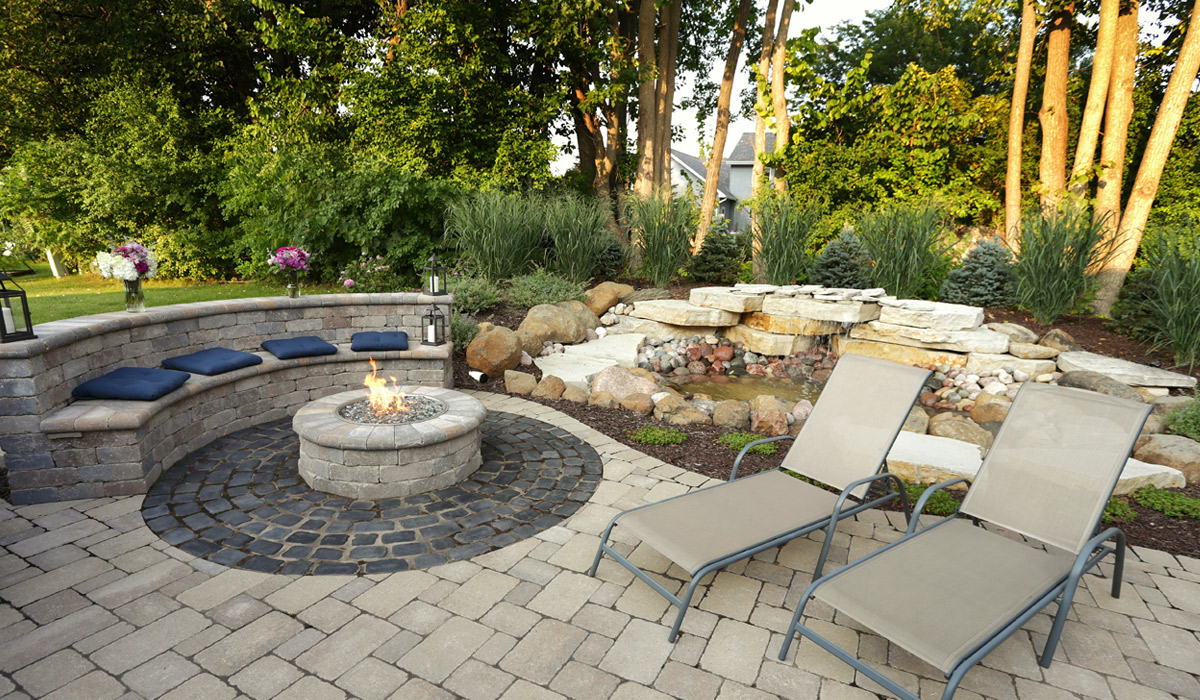
Our Outdoor Renovation project in Neenah shows this integrated approach. It combines a fiberglass pool with more than 1,700 square feet of paver decking, two upper patios, a timberframe pavilion, an outdoor kitchen, a retaining wall, a water feature, lighting, and a lower gathering area with a gas fire table.
There, the patio is part of a much larger design that ties the whole property together. You can see more of our paver patios and pool decks from across Northeast Wisconsin in our project gallery, and our comparison of fiberglass, concrete, and vinyl liner pools in Wisconsin covers the pool side of the decision.
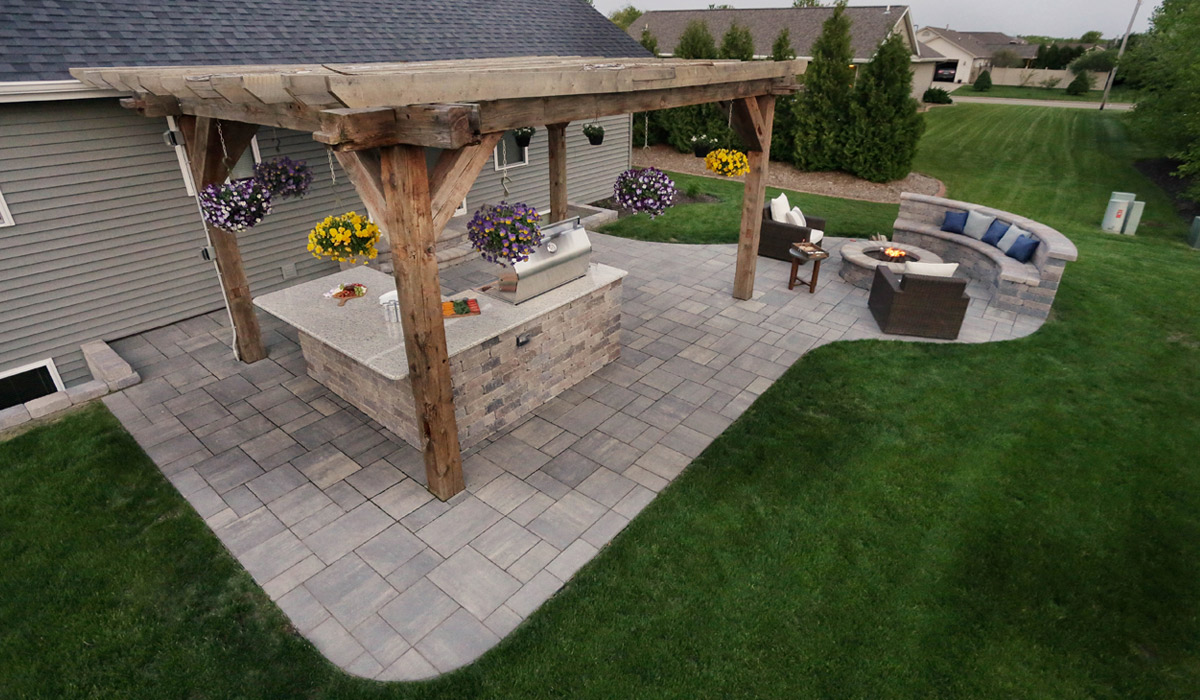
Our preference for pavers comes from the way we approach outdoor living. We design patios as part of complete outdoor environments that can include pools, kitchens, structures, fire features, retaining walls, and lighting.
Pavers provide flexibility within that larger system. They can create different zones, integrate borders and transitions, and accommodate repairs or future changes while leaving the rest of the patio undisturbed.
The ability to lift and reset individual pavers, and to repair one area while the rest of the patio stays as it is, is one of the practical advantages of our paver approach.
Concrete still makes sense in some situations.
Concrete may be appropriate when:
Concrete remains a widely used and durable patio material. The important thing is to understand its characteristics before choosing it. A homeowner who is comfortable with the possibility of future cracking and the repair considerations of a continuous slab may find concrete a perfectly reasonable choice.
Pavers may be especially attractive when:
For Wisconsin homeowners, the ability to address localized movement without replacing an entire surface can be an important consideration. It still comes back to installation.
Pavers need proper construction to perform. A poorly prepared paver patio can settle, a poorly drained patio can develop problems, and incorrect excavation or inadequate base preparation can undermine an otherwise high-quality paving system.
The paver style, color, and pattern are the parts of a patio everyone sees. The foundation underneath decides how well that surface holds up through Wisconsin winters.
The performance of an outdoor patio depends on the relationship between:
Soil + excavation + aggregate base + compaction + drainage + surface material
Wisconsin’s climate makes that relationship especially important. A properly installed patio should be designed around the actual property, with its depth and installation method tailored to the site.
When comparing contractors, ask about excavation, base preparation, drainage, and how the installation will be adapted to your property. The surface material is one part of the system.
Many patios eventually connect to a pool, outdoor kitchen, pavilion, fire feature, or landscaped area, which makes coordination especially valuable.
The patio elevation can affect pool access, for example. The location of an outdoor kitchen can influence circulation. A retaining wall can change the usable area of the yard. Lighting needs to account for steps and pathways.
Planning these features independently can create conflicts later. Planning them together lets the patio become part of a cohesive outdoor environment, and our guide to planning a complete outdoor living space in Wisconsin walks through that process.
That integrated approach is central to our work across communities including Appleton, Neenah, Green Bay, Oshkosh, Menasha, Kaukauna, and Fond du Lac.
The answer depends on your priorities. Both pavers and concrete can be durable patio materials when they are properly designed, installed, and maintained.
Concrete can offer a lower initial investment and a clean, continuous appearance, and it can be customized through colors, stamping, and decorative finishes.
Pavers typically offer greater flexibility for localized repairs, extensive pattern options, and integration with other hardscape elements. Their individual-unit construction can also be an advantage when dealing with localized movement or settlement. Those characteristics make pavers a strong fit for the Wisconsin outdoor living environments we design and build.
The bigger lesson is that installation quality determines how long either material lasts. In Wisconsin, a patio needs to be designed for water, soil movement, freezing temperatures, and thawing. Good excavation, base preparation, compaction, and drainage are fundamental to either system.
Choose the material based on your priorities, and choose the installation approach based on your property and climate.
It depends on your priorities. Both can perform well when properly designed and installed. Pavers offer advantages for localized repairs and design flexibility, while concrete can provide a continuous surface and often has a lower initial investment.
Pavers can move or settle if the soil or base beneath them shifts. Because they are individual units, a localized area can often be lifted, the underlying base corrected, and the pavers reinstalled. Proper excavation, base preparation, compaction, and drainage are essential.
Concrete can crack in Wisconsin, as it can in other climates. Freeze-thaw cycles, soil movement, moisture, installation practices, and other factors can contribute to cracking. Proper design, joints, subgrade preparation, and drainage help manage these risks.
A properly designed and installed paver patio can provide decades of service. Actual longevity depends on installation quality, soil conditions, drainage, maintenance, and use.
Yes. Pavers are commonly used for pool decks and pair well with fiberglass pools. They can create transitions between the pool, patio, outdoor kitchen, seating areas, and other hardscape features. The pool installation and surrounding patio should be designed together so elevations, drainage, and access work correctly.
For a Wisconsin homeowner, choosing a patio material is both a practical and an aesthetic decision. Think about how the patio will respond to winter, where water will go, how the underlying soil will behave, and what happens if part of the patio needs repair years from now. Then consider how the patio fits into everything else you want to do outside.
For homeowners in the Fox Valley and Northeast Wisconsin, we design and build paver patios as part of complete outdoor living environments, including pools, outdoor kitchens, structures, fire features, retaining walls, and lighting.
Explore our project portfolio to see how these elements work together, or schedule a consultation to discuss the right approach for your property.
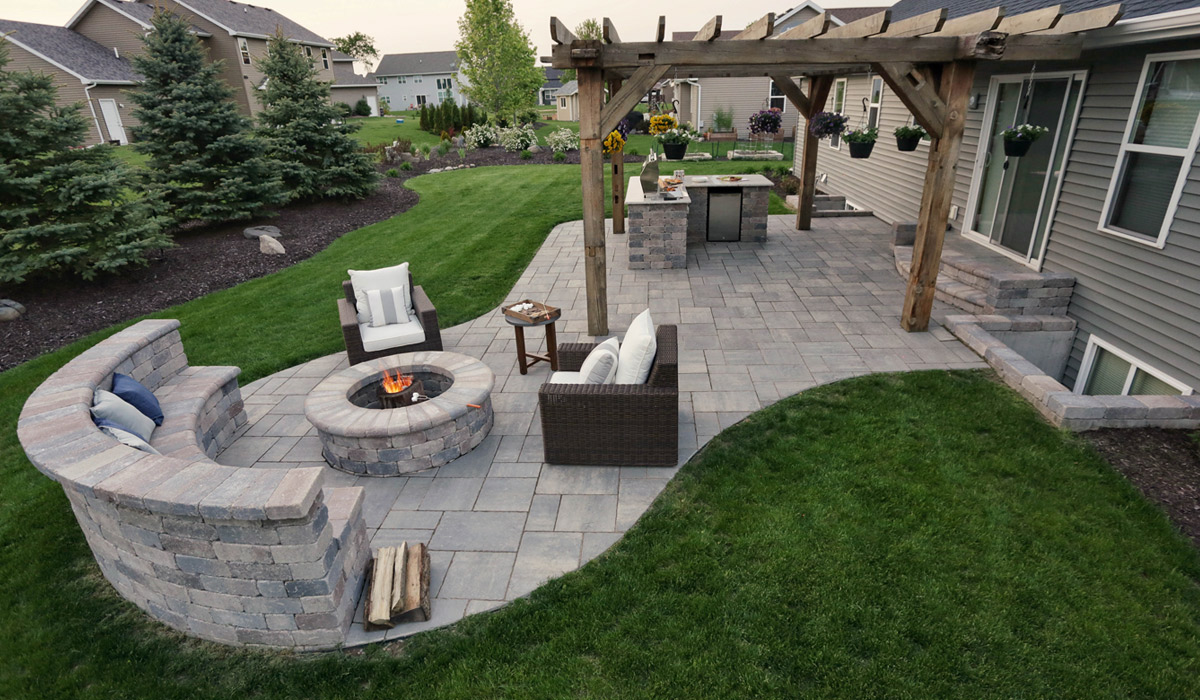
Simply put, patios are the fundamental footprint to any outdoor living design. Offering the most simplistic function to outdoor living, patios provide a blank canvas for you to sit, furnish and enjoy. Customizable by shape and size, there is no need to be wasteful with the product. Made specifically for your home and yard dimensions, each patio is designed to add value and usable space to your home by inviting people outside, expanding your home’s functional space. Laying the foundation for your outdoor living, a patio can be made to swoop around a fire feature, surround an inground pool, support your outdoor kitchen or even stand alone. The great part of a patio is that you have control of the amount of people you are able to accomodate by adding square footage to your patio. It really is as easy as modifying the dimensions for your hosting needs! Then furnish the area according to your style and purpose!

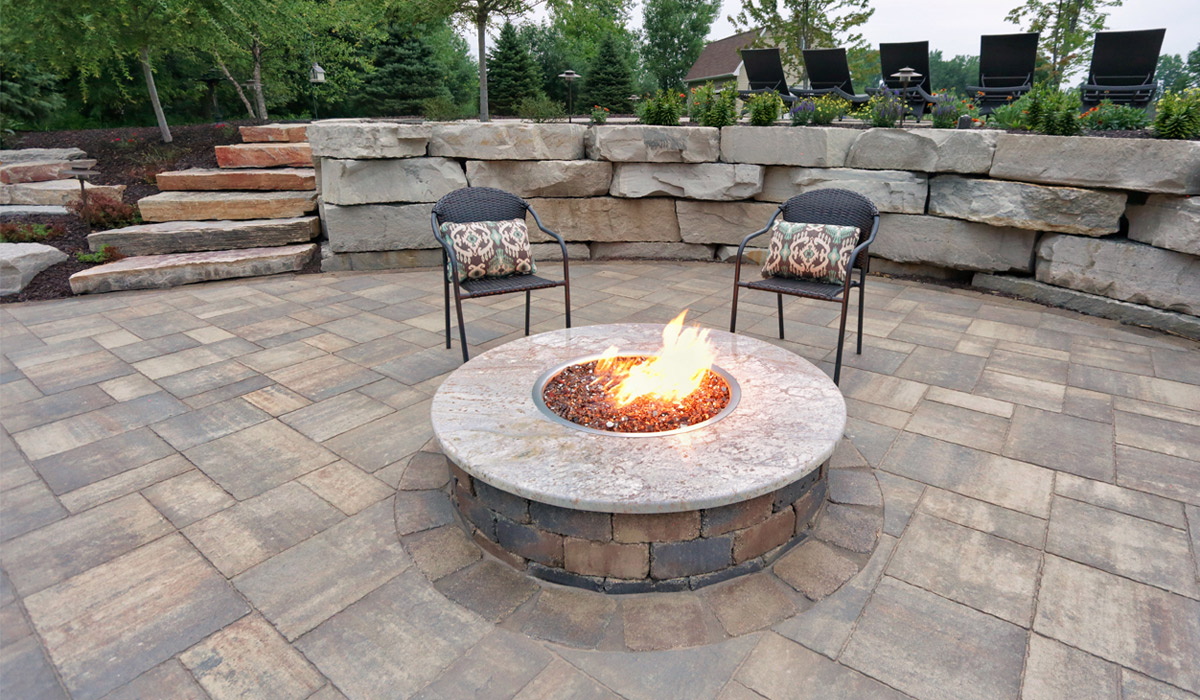
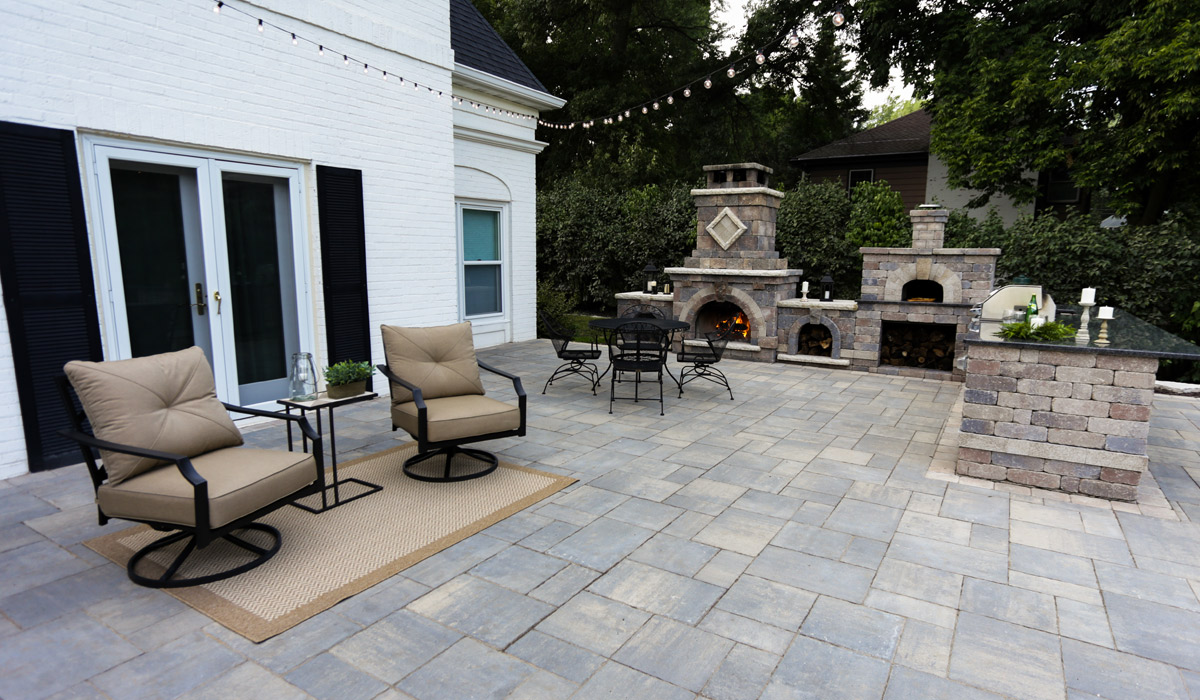
Paver patios are both functional and durable, offering sturdiness and visual interest. The warm colors and great patterns of a paver patio draw both you and your guests outside to enjoy your yard. Each detail of your patio is designed to last. The base is laid to best prevent shifting in years to come, poly sand is used to both adhere to the pavers and offer a weed barrier and some pavers materials may even offer a lifetime warranty! You can understand why paver patios are rising in popularity.
Wood decking is a thing of the past! Broken and rotting boards, splintering wood and oxidized color are all common issues with traditional decking. While decking needs to be maintained, replaced and restained, pavers are relatively maintenance free. Installed to last with minimal upkeep and maintenance, our paver patios are a great and easy option for your yard.
Contact one of our design professionals to discuss what type of patio might be best for you and your yard!