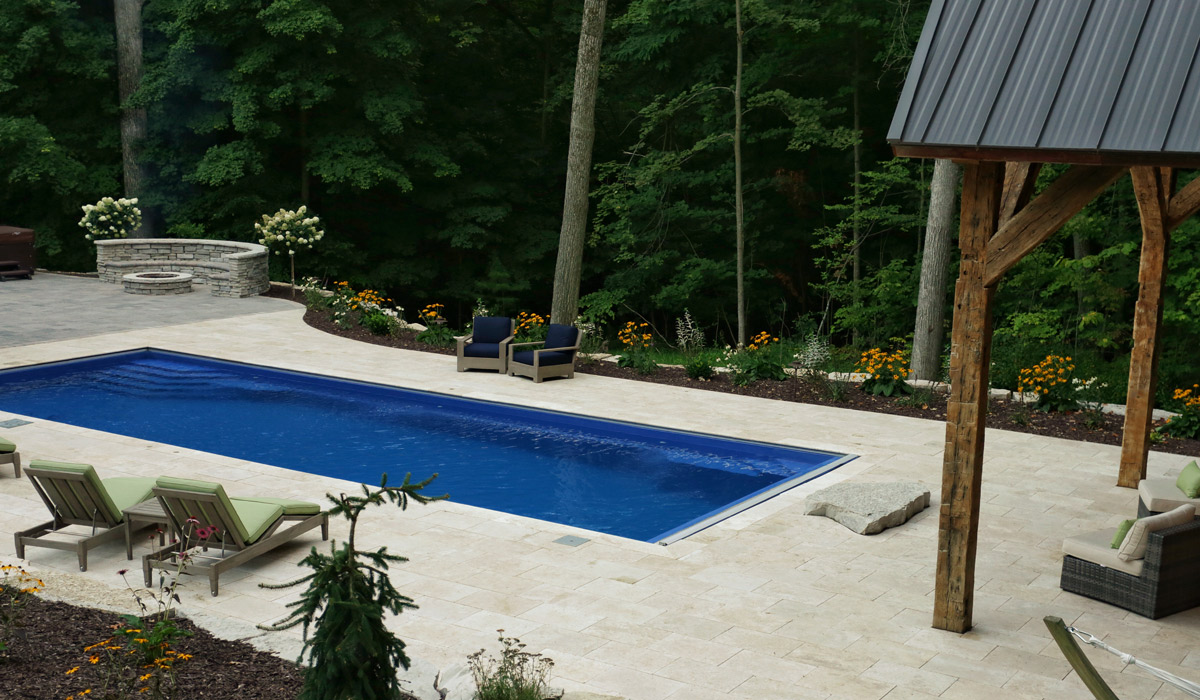
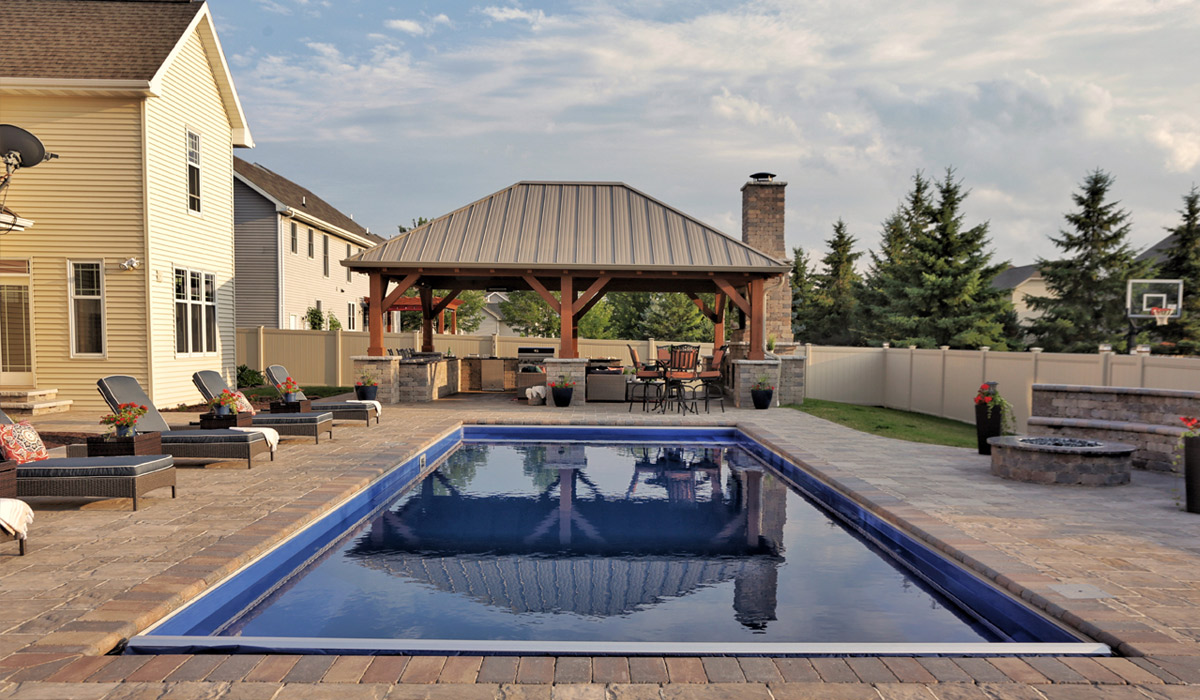
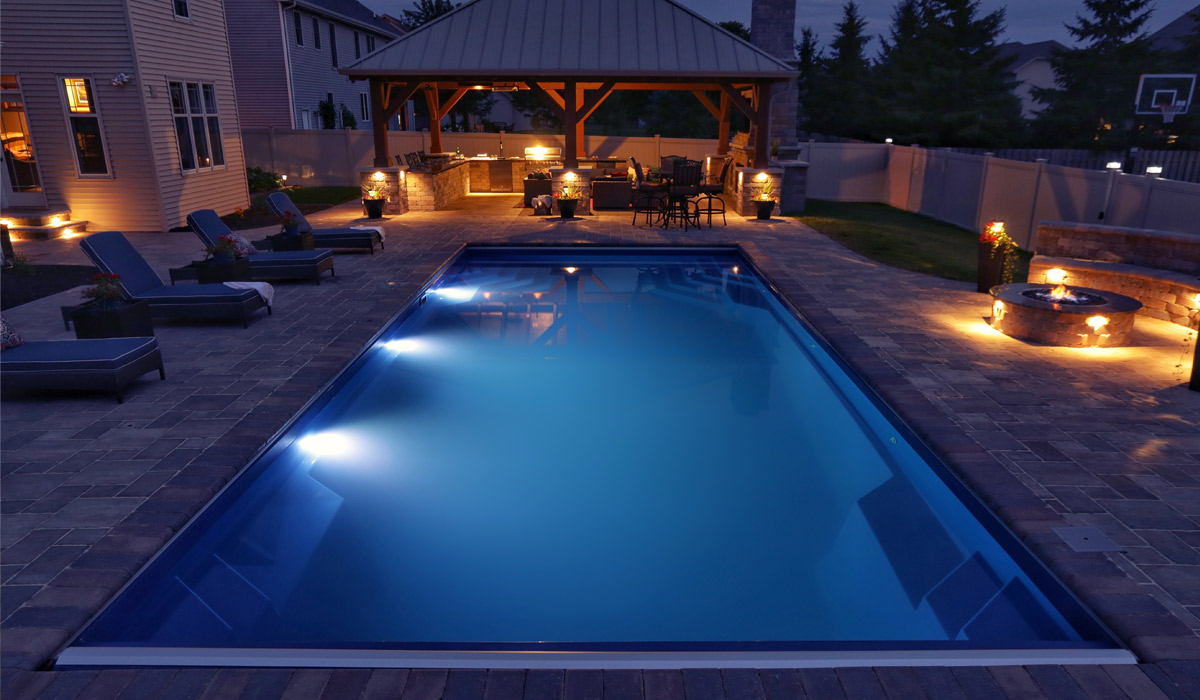
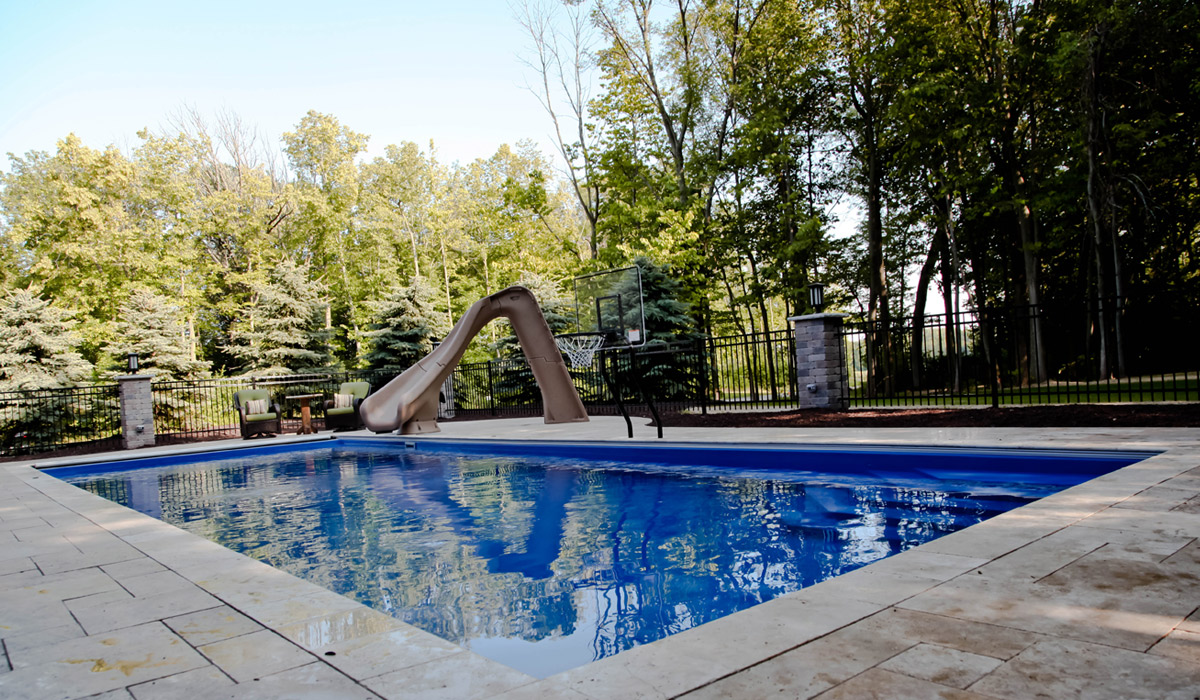
Summer in Northeast Wisconsin is short, and anyone who has waited all winter for a warm July afternoon knows how quickly it goes. So it makes sense that one of the most common questions we hear from homeowners is about timing: when is the best time to install a pool in Wisconsin?
For most families, the answer is spring or early summer, once the frost is out and the ground has dried enough to dig, with the planning done during the fall and winter before. A fall install can also work well, with its own set of trade-offs. The planning calendar shapes the building calendar, so an early start keeps the most options open.
For the construction process stage by stage, see our guide to how long it takes to install a fiberglass pool in Wisconsin.
Wisconsin's climate gives pool construction a defined window each year. Deciding when to install a pool in Wisconsin comes down to three seasonal factors that shape almost every project.
Excavation generally is not practical once the ground freezes, so digging waits until the frost is gone in spring. The pool, the patio base and any retaining walls all depend on that same thaw.
As frost leaves the ground, the soil stays soft and wet for a while, and spring rain can keep it saturated. Saturated soil can pause excavation until the ground dries out. Many Wisconsin counties and towns also post seasonal weight limits on local roads during the thaw, which can affect when heavy equipment and deliveries reach a property.
Summer is the payoff, and it moves quickly. Any week of construction that runs into June or July comes out of that first summer of swimming, so the timing of the install, and the planning that comes before it, has a direct effect on how much you enjoy the pool in year one.
Knowing when to start planning a pool means working backward from the summer you want to be swimming. For a pool you can use next summer, the fall and winter before are some of the most valuable months of the project, because design, selections and approvals can all move forward while the yard sits under snow.
Fall is a good time for the first consultation and walk around the yard. With the leaves down, the structure of the property is easier to read: the slopes, where water flows and collects, areas that may need drainage improvements, and the access path that heavy equipment and a one-piece fiberglass shell will need to reach the backyard. Spotting those details early leads to a better plan.
Fiberglass pools come in set shapes and sizes, so the model you choose influences the deck layout, the equipment location and the excavation itself. Barrier Reef builds the fiberglass shells we install, and our clients most often choose one of three rectangular models: the Whitsunday, offered in Standard, Lounger, Slim and Deep versions; the Bondi, with a sloped walk-in ledge and wide entry steps; and the Castaway, which builds a spa and a lounging ledge into the same shell. You can compare all three in our Barrier Reef pool models section. Choosing in winter also leaves room for lead times on the shell, pavers, stone and equipment, which can vary.
Winter gives you time to think through the design without pressure. That includes the pool's placement and everything around it: the deck and patios, walkways, gathering areas, lighting, fire features and landscaping. Gas lines, electrical and drainage are easiest to plan before anything is built over them, and our guide to planning a complete outdoor living space in Wisconsin walks through how those pieces fit together.
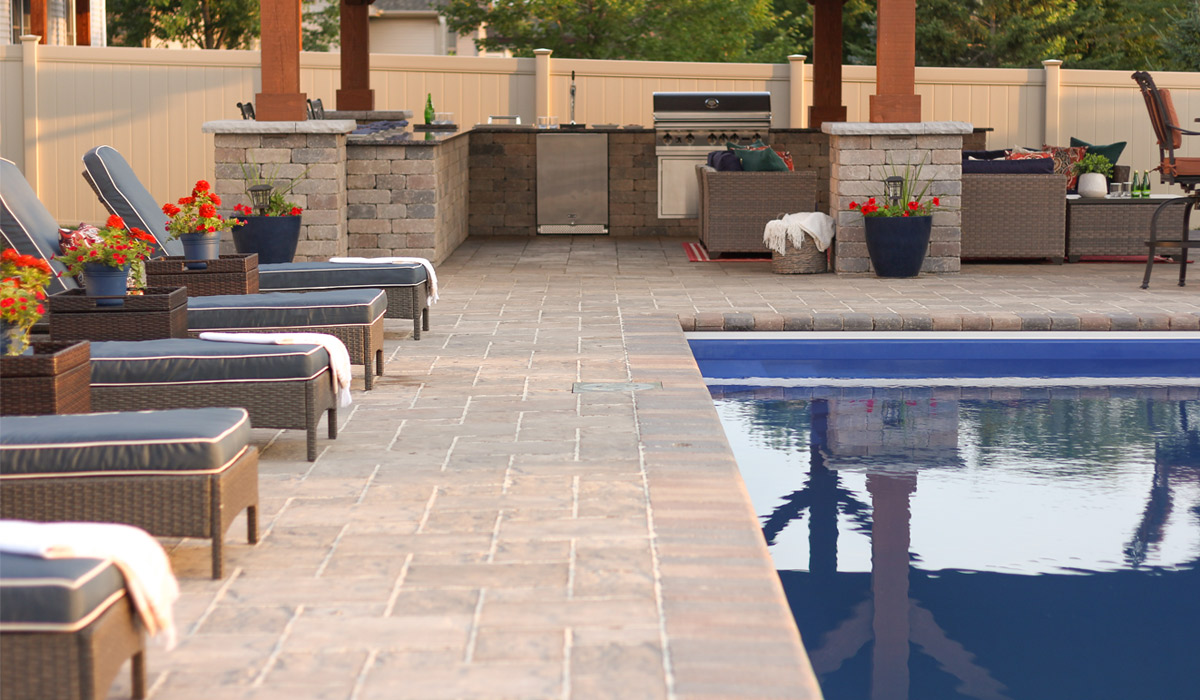
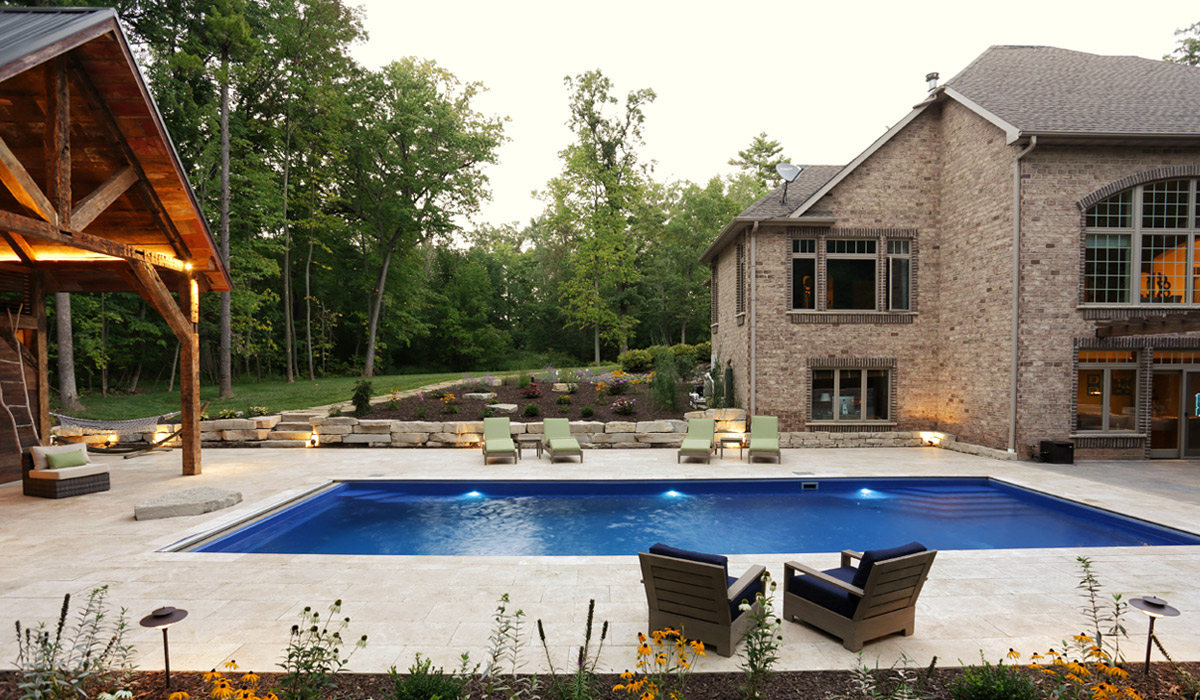
Our project, Pool Party, in Appleton shows how many decisions a complete backyard can hold. A 40-foot Whitsunday pool with a double sheer descent waterfall is paired with a 400-square-foot upper patio built around its own hot tub, and the property also includes an outcropping retaining wall with custom cut stone steps, a built-in kitchen, a gas fire table and 2,000 square feet of paver decking. Each of those features brings its own layout, utility and material choices, and settling them in the off-season keeps the building months focused on building.
Before any digging starts, a pool project needs the right approvals. Permit requirements vary from one Wisconsin community to the next and can cover setbacks from property lines, safety fencing and electrical work. If your neighborhood has a homeowners association (HOA), any review it requires for pools, fences or structures is worth requesting early. Spring brings a flood of permit applications to local municipalities, so applications submitted in January and February can avoid much of that backlog.
Many homeowners wait for the first warm spring day to reach out, and by then they are trying to design, permit and build at the same time. Starting in fall or winter means your plan is finished when the ground is ready, which puts you in a strong position on the installation schedule. Exact dates still depend on permits, weather and site conditions.
Each building season brings its own advantages and trade-offs. At a glance:
A spring or early summer install gives you the most swimming in year one. Most of the variables arrive with the thaw and spring weather. Soft, wet soil, rain and seasonal road weight limits can all shift when excavation and deliveries happen, and spring is when demand peaks for installation calendars and permit reviews alike. A plan settled over the winter puts you in the best position to start once conditions allow.
By midsummer the thaw is behind you, and the ground is usually easier to work. The trade-off is the calendar: a pool finished in late July or August has fewer warm weeks ahead of it. Homeowners who begin planning in spring often find the install carried into late summer, or into the following year. A summer install still gives you part of a season in the pool, and a full one the year after.
A fall install has a different appeal: the pool is in and ready for its first spring opening, so you can swim from the first warm weeks of the next season. The window is the catch. An early cold snap can change the order of work, particularly for hardscaping and planting, and once the ground freezes, excavation generally waits until spring. A pool finished in fall is also closed and winterized soon after startup, like any in-ground pool in Wisconsin.
The type of pool you choose affects how much of the building season the pool itself needs. A fiberglass shell is manufactured off site and arrives in one piece, ready to set, so the pool skips the lengthy forming and curing stage of a traditional concrete build. Fiberglass pools are generally known for a faster installation than many concrete pool projects, which counts in a state where the building window runs from the spring thaw to the first hard freeze.
That shorter pool install is a big part of why most of our clients are swimming the summer they sign. Exact timing still depends on the property, permits, weather and how much is being built around the pool, since a complete backyard with a patio, retaining walls, an outdoor kitchen and lighting takes longer to plan and build than the pool alone. Our fiberglass pool installation timeline walks through each stage, from excavation and shell placement to hardscaping and startup.
Still comparing materials? Our guide to fiberglass, concrete and vinyl liner pools in Wisconsin covers installation time along with maintenance, winter performance and lifespan.
For most homeowners, the best time to install a pool in Wisconsin is spring or early summer, with the planning done during the fall and winter before. That rhythm puts the frozen months to work on design and approvals and saves the building months for construction, which gives the first summer the most swim time. A typical year looks like this:
If you are reading this in fall or winter, you are right on time for next summer.
Our team designs and builds fiberglass pools and complete outdoor living spaces for homeowners in Appleton, Neenah, Green Bay, Oshkosh, Menasha, Fond du Lac and nearby Northeast Wisconsin communities. You can see finished pools and backyards from across the region in our project gallery.
It varies from year to year with the thaw, spring rain and permit calendars. For most homeowners, a spring or early summer install, once the frost is out and the soil has dried enough to dig, gives the most swim time in the first summer. A fall install can also work well, with the pool ready to open the following spring.
Pool construction in Wisconsin generally pauses for the winter, because excavation is not practical once the ground freezes. The colder months are the best time for the work that comes before construction: design, choosing a pool model, materials, and permit and HOA approvals.
If you want to swim next summer, start in fall or early winter. That leaves time for a property walkthrough, design decisions, model selection and permits before spring, when many homeowners start calling and municipalities see a wave of permit applications. Exact start and completion dates still depend on permits, weather and site conditions.
Yes. Fiberglass pools are generally known for a faster installation than many concrete pool projects, because the shell is manufactured off site and arrives ready to set. That suits a state where excavation waits for the thaw and the swim season is short. The full timeline still depends on the property, permits, weather and what else is being built around the pool.
Thinking about a pool for next summer? Schedule a consultation to talk through your property, your goals and a timeline that fits your backyard. The earlier the planning starts, the more flexibility you have.
Many backyards in Northeast Wisconsin slope away from the house, climb toward a tree line, or roll down toward a field. A pool can work beautifully on that kind of property, and the grade often gives the design its character: terraces, stone steps between levels, and a pool deck that looks out over the land below.
Building a pool on a sloped yard means settling a few connected questions early: where the water sits, how the hillside is held, how people move between levels, and where rain and snowmelt go. Each answer affects the others, and this guide walks through them in order, with examples from our own projects in Ripon, Appleton, and Neenah.
A pool’s water line is perfectly level, which makes it the one fixed reference point in a sloped yard. Every other elevation, from the back door to the lowest lawn, is planned up or down from that line.
Set the pool high, and the low side of the yard has to be built up and held in place. Set it low, and the pool cuts deeper into the hillside, with a taller grade to hold uphill. Many designs land in between, balancing the digging on the high side with the building up on the low side.
A few factors settle where that line falls:
A fiberglass pool is a single-piece composite shell with a fixed shape and depth, set level on a compacted base in an excavation sized for that shell. On a slope, the excavation runs deeper on the uphill side, and the downhill side may need to be built up to meet the top of the pool. Paver decking then runs out from the coping at the pool’s elevation, and any built-up ground beneath it needs careful compaction so the deck keeps a stable base through Wisconsin’s freezing and thawing.
The pool model plays a part, too. Our project, Obsidian Poolhouse, in Ripon uses a 35-foot Bondi, a Barrier Reef model with a sloped walk-in ledge for lounging, wide entry steps, and deep-end seating. On a slope, it helps to decide early which part of the pool meets the path from the house, so the entry steps and ledge sit where people arrive. You can compare our Barrier Reef pool models on our fiberglass pools page.
A retaining wall around a pool holds back soil so the water and deck can sit level. Uphill, the wall keeps the hillside off the deck. Downhill, it supports the built-up ground the deck rests on. The design question is how to divide that change in height.
Tiered walls break one large grade change into shorter walls with level ground between them. Each drop stays smaller, the space between walls becomes planting beds or narrow terraces, and the hillside keeps a natural, stepped shape. Spacing the tiers is part of the design, because walls set close together act on each other.
Our project, Modern Getaway, in Appleton uses three tiers of outcropping retaining wall to step the grade down toward the open farmland behind the property. At Obsidian Poolhouse in Ripon, tiered outcropping retaining walls and custom cut stone steps manage a meaningful grade change.
A single, taller wall takes up less of the yard from front to back, which helps on a narrow lot or near a property line. Height brings its own engineering, including geogrid, a reinforcing mesh laid in layers into the soil behind the stone. Many projects combine the two.
Our retaining walls start with a deep compacted base and a first course buried below grade. Drainage stone goes behind every wall, and geogrid reinforcement goes into anything over four feet. The walls themselves are natural stone (limestone outcropping, weathered fieldstone, or natural boulders), with every piece placed to lock against the course behind it. The goal is a wall that holds the hill and reads as part of the topography.
Once the pool’s elevation is set, the rest of the yard becomes a series of levels. A sloped backyard pool might have a patio at the back door, the pool deck a few steps down, and a lawn, fire area, or garden below. Giving each level a clear purpose keeps the yard easy to use.
Steps tie those levels together, and the people using them often have wet feet and full hands. A comfortable stair has:
Natural stone steps and walls keep a grade change looking like part of the landscape. Both Obsidian Poolhouse and Modern Getaway pair natural custom cut stone steps with outcropping retaining walls. The terraces themselves are often paver decking: 2,100 square feet at Obsidian Poolhouse, and 3,500 square feet tying the whole property together at Modern Getaway.
Water runs downhill, and a pool deck set into a hillside sits squarely in its path. In Wisconsin, the biggest tests come with spring snowmelt over ground that is still frozen or saturated, and with heavy summer rain. A good drainage plan accounts for water from four sources:
Each path needs an outlet, a place where water can soak in or leave the yard safely, away from the house, the pool, and the neighbors. Drainage belongs in the grading plan from the start, since it is much harder to add once the walls and deck are built.
Here are a few pool retaining wall ideas and details that make the most of a grade change in a Wisconsin yard.
A raised pool deck can look out over fields, woods, or water, and the high side of a sloped yard is a natural place for a structure. At Obsidian Poolhouse, the 35-foot Bondi sits below a fully finished pool house, which gives the property its second structure. At Modern Getaway, the open-truss loft of a two-story timberframe pool house looks down over the pool and hot tub. A level terrace above the water suits our timberframe pergolas, pavilions, and pool houses well.
A retaining wall built to seat height becomes a bench. Our project, Lakeside Luxury, in Neenah frames its pool area with an outcropping retaining wall that has a built-in sit-wall, turning the grade change into extra seating. Planting helps stone settle into a yard. At Obsidian Poolhouse, updated planter beds soften the stonework at the edges, and at our Poolside Retreat project, also in Neenah, the pool is set against an outcropping retaining wall softened by updated planting beds at its edge.
Steps are where light matters most after dark, and low light across a stone wall brings out its texture. Planning outdoor lighting with the hardscape lets wiring run before the walls and decking go in. At Modern Getaway in Appleton, custom lighting covers the structure and the hardscaping, and the property is lit end to end after dark.
Bring these questions to your design conversations:
Our guide to planning a complete outdoor living space in Wisconsin shows how grading and walls fit the whole backyard plan, and our article on how long a fiberglass pool installation takes in Wisconsin covers how retaining walls affect the schedule. You can see finished pools on sloped lots in our project gallery.
Yes. The pool is set at one level elevation, and grading, retaining walls, steps, and decking handle the change in height around it. The steepness of the slope, the soil, drainage, and equipment access all shape the design.
On a noticeable slope, usually yes, since the height difference between a level deck and sloping ground has to be held somewhere. Our walls are built on a deep compacted base, with drainage stone behind them and geogrid reinforcement on anything over four feet.
Each suits different sites. Tiers split a grade change into shorter walls with planting or level space between them, which looks natural on a hillside. A single taller wall uses less of the yard, which helps on a tight lot.
Uphill runoff is routed around the pool area, the deck is pitched away from the water, drainage stone behind each wall lets water out of the soil, and downspouts are directed away from the deck. In Wisconsin, spring thaw puts that plan to its biggest test.
Yes. The single-piece shell is set level in an excavation sized for it, and walls, steps, and decking shape the grade around it. Our project, Obsidian Poolhouse, in Ripon pairs a 35-foot Bondi with tiered outcropping retaining walls and custom cut stone steps.
If your backyard slopes and a pool is on your wish list, schedule a consultation and tell us about your property. Every project we design and build begins with that conversation.
Search for a Barrier Reef lounger pool and the same names come up: Whitsunday Lounger, Outback Lounger, Coral Sea Lounger, Sydney Harbour. Each one builds a shallow shelf for sitting and sunning into the pool shell, and the size of that shelf, along with what shares the shell with it, decides how the pool gets used.
Barrier Reef builds the fiberglass shells we install, and the Whitsunday, Bondi and Castaway are the three models our clients choose most often. This guide compares them with the other Barrier Reef pool models people search for, using the specs Barrier Reef publishes.
A tanning ledge is a broad, flat step, usually at the shallow end, where you can sit, lie back or set a lounge chair in the water. Barrier Reef’s model pages call it a Lounger, lounge pad, lounging ledge, tanning ledge or sundeck. In a tanning ledge fiberglass pool, the ledge is molded into the same one-piece shell as the steps and seats.
Depth decides what a ledge is for. With water around your ankles and calves, it works like a wet patio: room for in-water lounge chairs, a seat with your feet in, and a splash zone for small children with an adult beside them. Deeper water turns a ledge into a bench, with the water at an adult’s waist.
Barrier Reef lists a size for most of its built-in loungers and leaves out the water depth. Its separate sundecks give a sense of scale: the Cube Sundeck holds 10 inches of water, and the Sandbar Sundeck holds a foot. If you plan on in-water lounge chairs, ask to see the shell drawing for your model.
Footprint decides how many people can share a ledge. The Whitsunday Lounger’s shelf measures 9′ x 5′3″, and the Outback Lounger’s lounge pad spans the full width of its shell, at 6′ x 11′3″, or 6′ x 14′ on the Wide version.
Size also trades against swimming water, so weigh how much of the shallow end you want as open water. On the Whitsunday, the Lounger versions keep the standard shells’ length, width and listed depths, and Barrier Reef lists them at 200 to 300 gallons less.
The table compares the Barrier Reef pool models in this guide, with sizes taken from each model page.
| Model | Shape and size | Lounger or ledge | Also built in |
|---|---|---|---|
| Whitsunday Lounger | Rectangle, 31′2″ or 35′ x 15′8″ | Lounger, 9′ x 5′3″ | Entry steps, deep-end seat, swim-outs |
| Bondi | Rectangle, 35′ or 40′ x 15′8″ | Sloped walk-in lounger, 8′ (35) or 11′ (40) | Entry steps, deep-end seating |
| Castaway | Rectangle, 30′ or 35′ x 15′8″ | Lounging ledge | Integrated spa, deep-end seating |
| Outback Lounger | Rectangle, 30′ x 11′3″ or 14′ | Lounge pad, 6′ x 11′3″ or 6′ x 14′ | Flat 4′3″ floor, swim-outs |
| Outback Dundee Lounger | Rectangle, 30′ x 14′ | Lounge pad, 8′6″ x 4′6″ | Entry steps, deep-end seating, swim-outs |
| Coral Sea Lounger | Freeform, 31′2″ or 35′ x 15′2″ | Lounger, 9′ x 6′5″ | Entry steps, deep-end seat, swim-outs |
| Sydney Harbour | Rectangle, 35′ or 39′10½″ x 16′ | Lounging ledge, sundeck, two lounger areas | Integrated spa, entry steps |
| Aussie (new for 2026) | Rectangle, 30′ or 35′ x 15′9″ | Tanning ledge, lounger listed at 6′2″ | Entry steps, deep-end seating |
| Oasis (new for 2026) | Rectangle, 30′ x 11′3″ | Tanning ledge | Deep-end benches, swim-outs |
Every model in the table also lists a perimeter safety ledge, a narrow ledge around the inside of the wall where swimmers can rest.
The Whitsunday is Barrier Reef’s most versatile rectangle, offered in Standard, Lounger, Slim and Deep versions, and it is the model behind most of the pools in our portfolio. Its Lounger versions come in 30 and 35, both 15′8″ wide with a 3′6″ shallow end and a 9′ x 5′3″ lounger. The 30 measures 31′2″ overall, the number to use when you plan the yard.
Our project, Lakeside Luxury, in Neenah, sets a 30′ Whitsunday Lounger in 1,700 square feet of paver decking, with an outcropping retaining wall and a built-in sit-wall. Simple Serenity, our project in Menasha, pairs a 30′ Whitsunday with 1,400 square feet of paver decking and a built-in stone fire pit.
The Bondi builds its lounging space into the entry: a sloped walk-in ledge that Barrier Reef lists at 8′ on the Bondi 35 and 11′ on the Bondi 40, with wide, textured entry steps and deep-end seating. Our project, Obsidian Poolhouse, in Ripon, sets a 35′ Bondi below a fully finished pool house, with 2,100 square feet of paver decking.
The Castaway puts an integrated spa and a lounging ledge in one shell, with deep-end lounge seating, in 30′ and 35′ lengths. Its shallow end is listed at 4′4″, compared with 3′6″ on the Whitsunday, so families with young swimmers should note where the ledge and steps sit. Our project, Quiet Solitude, in Omro, places a 30′ Castaway beside a timberframe pavilion and outdoor kitchen.
The Outback Lounger is a 30′ rectangle with a flat floor at 4′3″ and a lounge pad that spans the shell, 11′3″ wide on the standard version and 14′ on the Outback Lounger Wide. With no deep end, the whole pool sits at one depth, a layout that suits pool games and water exercise.
The Outback Dundee Lounger is a different shell: a 30′ x 14′ rectangle with a 3′8″ shallow end, a 5′10″ deep end, an 8′6″ x 4′6″ lounge pad and deep-end seating with swim-outs. Searching for the Outback Escape? Barrier Reef’s site uses that name for the Escape Plunge, a 17′ x 8′6″ plunge pool, 4′7″ deep, with built-in lounging.
The Coral Sea is the freeform shape in this group, with Lounger versions at 31′2″ and 35′ long, both 15′2″ wide. Its 9′ x 6′5″ lounger is a little larger than the Whitsunday’s, and the shell adds deep-end seating, swim-outs and textured entry steps.
Often searched as Sydney Harbor, the Sydney Harbour is a 16′ wide rectangle in 35′ and 40′ sizes (the 40 measures 39′10½″). One shell holds an integrated spa, a lounging ledge and a sundeck, and Barrier Reef lists two lounger areas on each size, the larger measuring 11′11″ x 5′7″ on the 40.
Barrier Reef lists the Aussie and Oasis as new for 2026, both with a tanning ledge, and presents its 15′8″ x 9′ Sandbar Sundeck as a complement to the Whitsunday. If a model beyond the Whitsunday, Bondi and Castaway catches your eye, ask us about Barrier Reef’s full lineup.
Picking a Barrier Reef lounger pool comes down to two questions: how much room you have, and how your household spends a summer day in the water.
The shell sets the minimum footprint. Decking, setbacks and the equipment pad add to it, and a one-piece shell needs a clear path into the yard. The narrowest models here are the Outback Lounger and Oasis at 11′3″ wide, and the widest is the Sydney Harbour at 16′. Quiet Solitude fits its 30′ Castaway, pavilion and outdoor kitchen with 1,235 square feet of paver decking.
For young kids, look at the shallow end and the ledge together. The Whitsunday Lounger pairs a 3′6″ shallow end with its lounger and wide, textured entry steps, giving little ones a shallow spot and an easy way in. Shallow water still calls for an adult within arm’s reach.
For a pool that hosts gatherings, give the ledge more room. The Outback Lounger Wide’s 6′ x 14′ pad and the Sydney Harbour’s two lounger areas let several guests sit in the water together, and the Bondi 40’s 11′ walk-in ledge doubles as a gradual way in.
For laps, length is the number to watch. Barrier Reef lists Whitsunday Lounger versions at 30 and 35 feet, so a swimmer who also wants a lounging spot might consider the Bondi 40 and its 11′ walk-in lounger. Poolside Retreat, our project in Neenah, is built around a 40′ Whitsunday with double sheer descent waterfalls.
The Castaway and Sydney Harbour each build a spa into the pool shell along with a lounging ledge, so one shell covers soaking, lounging and swimming. For a spa set beside the pool, Barrier Reef also makes separate fiberglass spas, including the Cube, Horseshoe, Oval and Resort.
Our swimming season is short, so features that get used on cool evenings and early summer days count for a lot. A ledge lets someone sit in the water without committing to a full swim.
If an automatic cover is on your list, plan it during the pool design. Covers are simplest on a rectangle, so a freeform shell like the Coral Sea calls for an earlier conversation. A cover can also make closing the pool easier each fall.
Fiberglass also suits our freeze-thaw cycles. The ledge, steps and seats are molded into the same single-piece composite shell as the rest of the pool, a shell that holds its finish, holds its shape and holds up to thirty Wisconsin winters. Our comparison of fiberglass, concrete and vinyl liner pools covers winter performance, and our fiberglass pool installation guide walks through each stage of a project.
It is a Barrier Reef fiberglass pool with a lounger built into the shell: a broad, shallow shelf for sitting and sunning in the water. Lounger versions include the Whitsunday Lounger, Coral Sea Lounger, Outback Lounger and Outback Dundee Lounger.
Barrier Reef lists a lounger of 9 feet by 5 feet 3 inches on both the Whitsunday 30 Lounger and the Whitsunday 35 Lounger, in shells 15 feet 8 inches wide.
Barrier Reef spells it Sydney Harbour. It is a 16 foot wide rectangle in 35 and 40 foot sizes, with an integrated spa, a lounging ledge and a sundeck in one shell.
Our clients choose the Whitsunday, Bondi and Castaway most often. Barrier Reef’s full lineup covers more shapes and sizes, plus spas and sundecks, so ask us about any model that catches your eye.
Ready to picture a lounger in your own backyard? Contact our team to talk through the Barrier Reef models that suit your yard, or see the Whitsunday, Bondi and Castaway in our projects on our fiberglass pools page.
Every spring, the first warm weekend in the Fox Valley sends pool owners out to the backyard to look at the cover and wonder if it's time. Deciding when to open your pool in Wisconsin comes down to a handful of signals: the weather trend, the water temperature, the forecast, and the trees around your yard.
If you have ever typed "when to open pool in Wisconsin" into a search bar, you have probably found a date range. That range is a useful starting point. The signals below help you pick the right week inside it, and the sections after them cover what can go wrong with an early or late opening, what a professional pool opening service includes, and what you can do before and after opening day.
In Northeast Wisconsin, most pool openings fall between late April and mid-May. Many homeowners aim for early to mid-May, which gets the pool running ahead of Memorial Day weekend and before the warmest weather settles in.
The exact week shifts from year to year. A Wisconsin spring can bring a run of days in the 70s in late April, then a frost warning the following week. The calendar gives you the window, and the weather tells you where you are in it.
Four signals tell you the most. When three or four of them line up, it's a good time to book your opening.
Look for a stretch of a week or more with daytime highs in the upper 60s and low 70s, and nights that stay above freezing. Many pool professionals recommend opening before daytime temperatures settle above 70°F, because that is when algae starts to grow quickly in still water under a cover. Algae grows quickly in warm, still water, and opening as the highs climb gives your filter and sanitizer a head start, so they are already working when the warm days arrive.
Pool water warms more slowly than the air, so the water under your cover trails the weather. Algae grows slowly in cold water and speeds up as the water warms, especially once it reaches the mid-60s and beyond. A mesh safety cover also lets rain and some sunlight through, which gives algae more to work with as spring goes on. The goal is to have the filter running and the chemistry balanced while the water is still cool.
Before you book, check the 10-day forecast. A stretch of mild days with no hard freeze in sight is a good sign. A brief cold snap after opening is usually manageable, because water that keeps moving through the pump and plumbing is much less likely to freeze. Many pool professionals suggest running the pump around the clock on nights near freezing until the weather settles.
The trees around your yard keep a calendar of their own. When the maples and oaks start to bud and flower, pollen, seeds, and catkins begin landing on the cover, and some of it washes into the water. Opening around the time the trees leaf out means the skimmer and filter are running to catch that debris while it is still floating, before it sinks, breaks down, and feeds algae.
An early opening has a few downsides. The pump runs and the chemicals work for weeks before the water is warm enough for most people to swim, and a hard freeze after opening can put water-filled equipment at risk if the pump is off. For most pools, these are small and easy to manage, which is why many Wisconsin pool owners lean toward the early side of the window.
Waiting too long carries the bigger risk. As the water warms under the cover, algae can take hold, and the leaves and debris that sat in the pool all winter keep breaking down. The result is what pool professionals call a green opening: cloudy or green water that needs extra shock treatments, more filtering, and more cleaning before anyone can swim. Leaves left on the floor of the pool can also stain the surface, and every warm week spent waiting is a week of swimming you don't get back.
Our pool service team is led by Terry Fournier, our Pool Service Manager and Master Technician. An opening works through the closing in reverse, one step at a time, until clean water is moving through the system again. Here is what our pool opening service covers:
A standard opening gets the system running and starts the water chemistry. If you would like the pool cleaned, we schedule that as a separate visit once the startup chlorine has dissipated and the water has cleared, and our Signature Pool Start Package pairs a Full Service Opening with three professional cleanings. If your pool has an attached spa, like our project, Backyard Bliss, in Neenah, a spa opening can be added so the pool and spa are ready at the same time.
Our team opens residential and commercial pools in Neenah, Appleton, Green Bay, and nearby communities across Northeast Wisconsin.
For help all summer, our weekly pool service skims, brushes, and vacuums the pool, checks the equipment, and tests and balances the water every week from opening day to closing day. When fall comes around, our guide to when to close your pool in Wisconsin covers the other end of the season.
Most Wisconsin pools open between late April and mid-May, ahead of Memorial Day. The right week depends on the weather, so watch for a stretch of daytime highs near 70°F, nights that stay above freezing, and a mild 10-day forecast.
Many pool professionals recommend waiting 24 to 48 hours after the startup chemicals go in, so the water can circulate and the chemistry can settle. Test the water before the first swim, and give it more time if it still looks cloudy.
No. Fully draining a pool without professional guidance is risky, especially in spring. Snowmelt and spring rain raise the water table in Wisconsin, and an empty pool can shift or even lift out of the ground. A normal opening tops the water off to its operating level.
Green water at opening usually means algae grew while the water warmed under the cover. Steady filtration, shock treatment, and brushing can clear it, though it takes longer and uses more chemicals than a clear opening. Opening a little earlier next spring is the simplest way to avoid it.
When the weather starts to turn, schedule your pool opening with our team and get clean water moving before the warm days arrive. Have a question about timing? Contact us, and our pool service team can help you choose the right week.
Late summer in Wisconsin has a way of hanging on. A warm week in September makes it tempting to keep swimming, while the forecast starts hinting at the first frost. Deciding when to close your pool in Wisconsin comes down to a few signals: the water temperature, the daytime highs and overnight lows, the forecast, and the leaves starting to fall.
Search "when to close pool in Wisconsin" and you will find a date range, which is a good place to start. The signals below help you choose the right week inside that range. After them, we cover the risks of closing too early or too late, what a professional pool closing service includes, and what you can do before closing day and through the winter.
In Northeast Wisconsin, most pool closings fall between mid-September and early October. Many homeowners aim for late September or early October, which leaves time to enjoy the last warm days and still finish before the first hard freeze.
Pool closing and pool winterization are two names for the same job: preparing the water, plumbing, and equipment for freezing temperatures, then securing the pool under a winter cover until spring. The timing matters at both ends of that window. Close while the water is still warm, and algae can grow under the cover. Wait past the first hard freeze, and ice can crack the lines and equipment.
Water temperature is one of the most useful signals. Many pool professionals recommend closing once the water stays below about 65°F, because algae grows slowly in cool water and the pool has a much easier time staying clear under the cover. A pool thermometer, or the readout on a heater or automation system, will show you the trend over a week or two.
Air temperatures drive the water temperature. When daytime highs stay below about 70°F and nights regularly dip under 50°F, the water cools steadily and good swimming days get scarce. In most years, that pattern settles over the Fox Valley sometime in September.
Once September arrives, keep an eye on the 10-day forecast. The goal is to have the lines blown out and plugged and the equipment winterized before the first hard freeze, when temperatures stay below freezing long enough to freeze standing water. In Northeast Wisconsin, the first frosts often show up in late September or October. If a cold night arrives before your closing date, many pool professionals suggest running the pump around the clock until it passes, since moving water is much less likely to freeze inside the plumbing.
The trees send a clear signal, too. Once the maples and oaks start to turn and drop, the skimmer fills faster and leaves start sinking to the floor of the pool. Leaves that sit in the water stain surfaces, use up chlorine, and feed algae. In a yard with a lot of trees, closing around the start of the leaf drop lets the safety cover catch most of what falls, and the leaves on top can be blown or brushed off the cover through the fall.
Closing during a warm stretch gives algae its best chance. Once the cover goes on, the water stops circulating and the sanitizer slowly fades, and warm water with no filtration is where algae grows fastest. A September heat wave after an early closing can leave you with cloudy or green water under the cover in spring, and a slower, harder opening. You also give up some of the best swimming weather of the year, since early September in Wisconsin can still feel like summer.
Waiting too long puts the plumbing and equipment at risk. Water left in the lines, pump, filter, or heater expands as it freezes, and that expansion can crack pipes and equipment from the inside. The damage usually stays hidden under the cover until spring, when it shows up as leaks or equipment that won't run. A late closing also gives the leaves more time to collect in the water.
Our pool service team, led by Terry Fournier, our Pool Service Manager and Master Technician, closes residential and commercial pools in Neenah, Appleton, Green Bay, and nearby communities across Northeast Wisconsin. Each step of a closing protects the next one, so the order matters. Here is what our pool closing service covers:
A pool should never be drained completely for winter. The water left in the pool helps balance the pressure from the surrounding ground and protects the shell or liner during freeze-thaw cycles, whether you own one of the Barrier Reef fiberglass pools we design and build or another type of pool. Our closing options let you choose whether the closing includes our standard chemicals and whether our team installs your winter cover.
When spring comes back around, our guide to when to open your pool in Wisconsin covers the signals for opening day. Between opening and closing, our weekly pool service helps keep the water clean and balanced and the equipment running all season.
Many pool professionals recommend closing once the water stays below about 65°F. Algae grows slowly in cool water, which helps the pool stay clear under the cover until spring. In Wisconsin, that usually lines up with daytime highs below about 70°F and nights that dip under 50°F.
You can, though warm September weather raises the chance of algae growing under the cover. If you close early, make sure the water is clean and balanced first. Many homeowners wait for cooler water, which in Wisconsin usually means closing in late September or early October.
Run the pump around the clock through any freezing nights, since water that keeps moving through the pipes and equipment is much less likely to freeze. Water sitting still in a line, pump, filter, or heater during a hard freeze can expand and crack it, so if the cold looks like it will last, move your closing up as soon as you can.
No. The water should come down to the level your pool's manufacturer recommends for winter, which keeps ice out of the skimmer. The water left in the pool helps balance the pressure from the surrounding ground and protects the shell or liner through freeze-thaw cycles.
Ready to put the pool to bed for the season? Schedule your pool closing with our team before the first hard freeze, or contact us with any questions about timing.
Choosing an inground pool is a long-term decision. The material you choose affects installation, maintenance, customization, repairs, and what ownership looks like for years after the pool goes in.
For Wisconsin homeowners, the climate adds another layer to that decision.
A pool in Appleton, Neenah, Green Bay, Oshkosh, or Fond du Lac has to be designed and winterized for freezing temperatures, snow, and seasonal changes in the ground. Wisconsin also gives homeowners a relatively short swimming season, which makes the timing and efficiency of installation especially important.
The three most common types of inground pool construction are fiberglass, concrete, and vinyl liner. Each has meaningful advantages and tradeoffs, and the right one depends on the property and the homeowner.
Here is how they compare.
| Factor | Fiberglass | Concrete | Vinyl liner |
|---|---|---|---|
| Initial investment | Generally mid-to-high range | Generally highest | Generally lower initial cost |
| Installation time | Typically fastest | Typically longest | Generally between fiberglass and concrete |
| Maintenance | Generally lower | Generally higher | Moderate |
| Durability | Durable composite shell | Very durable structural material | Durable, with a liner that is a replaceable component |
| Customization | Limited to available shell designs | Highest customization | Highly customizable shapes and sizes |
| Surface | Smooth, nonporous gelcoat | Textured, porous surface | Smooth vinyl |
| Winter and freeze-thaw | Well suited when properly installed and winterized | Proven in cold climates; the surface and structure need ongoing care | Performs in cold climates when properly installed and winterized |
| Long-term costs | Often favorable, with no liner or routine resurfacing | Can be higher because of maintenance and resurfacing | Replacement liners are a recurring ownership cost |
| Liner or resurfacing | No liner and no routine resurfacing | May eventually require resurfacing | Liner eventually needs replacement |
Costs vary significantly by pool size, site conditions, excavation, access, decking, equipment, finishes, and features. A direct quote is necessary to compare actual project costs.
The table is a starting point. The differences become clearer when you look at each pool type on its own.
A fiberglass pool arrives at the property as a manufactured shell. The shell is set into the prepared excavation, connected to the plumbing and equipment, and finished with the surrounding patio or decking.
The manufacturing process gives fiberglass one of its defining characteristics: the interior surface is already finished at the factory.
Smooth, nonporous surface. Fiberglass pools have a smooth gelcoat surface that is comfortable underfoot and can make routine cleaning easier. That nonporous surface is also one reason fiberglass pools are generally associated with lower maintenance than concrete. Pool chemistry still matters, and the surface itself needs less ongoing care than a porous concrete finish.
Faster installation. Because the shell is manufactured before it arrives, the pool structure is already built when it reaches the jobsite. That is especially relevant in Wisconsin, where the outdoor construction and swimming seasons are limited.
Fiberglass pool installation is our specialty throughout Wisconsin, and installing the pool itself takes a matter of days. Actual timelines still depend on excavation, site access, weather, permitting, utilities, surrounding construction, and the complexity of the overall project. Our guide to how long a fiberglass pool installation takes in Wisconsin walks through each stage.
No liner replacement. Fiberglass has no vinyl liner to replace periodically, which removes one recurring component from long-term pool ownership.
Integrated features. Modern fiberglass pools come in a wide range of shapes. Depending on the manufacturer and model, homeowners can choose features such as tanning ledges, integrated steps, benches, seating areas, and attached spas. The Barrier Reef fiberglass pools we install include models with integrated stairs, tanning ledges, and wraparound seating, in multiple dimensions and configurations.
A strong fit for Wisconsin’s climate. Fiberglass shells have some structural flexibility, which can be useful where the surrounding soil moves with the seasons. Northern-climate pool installations still require proper engineering, drainage, and winterization, and fiberglass is an established option for cold-weather regions.
The biggest tradeoff is customization. A fiberglass pool is manufactured from a mold, so homeowners choose from a set of available models and sizes. A homeowner looking for a highly unusual shape, very specific dimensions, or architectural geometry may find concrete more flexible.
Fiberglass can also have a higher initial cost than some vinyl liner options, depending on the project.
In short, fiberglass trades some design flexibility for a manufactured shell, faster installation, and a finished surface with no liner to replace.
Concrete, often called gunite or shotcrete in pool construction, offers the greatest degree of structural and design customization. The pool is built on site, from the ground up.
Maximum customization. Concrete is the option to consider when the pool design itself is highly architectural or unusual. It can accommodate custom shapes, varying depths, curves, integrated water features, and dimensions a fiberglass manufacturer may not offer. For homeowners with a very specific design concept or a challenging property, that flexibility can be significant.
Highly durable structure. A properly constructed concrete pool can have a very long service life. The interior finish is a separate consideration: depending on the finish selected and the conditions over time, it can require maintenance and eventual resurfacing.
Longer construction process. A concrete pool is built largely on site, which generally means a longer construction process than a pre-manufactured fiberglass shell. That difference matters in Wisconsin. If excavation, construction, and finishing extend deeper into the warm-weather calendar, homeowners have fewer chances to use the pool during the first season.
More maintenance. Concrete’s textured surface can require more attention than a smooth fiberglass surface. Water chemistry is especially important, and homeowners should expect more ongoing surface maintenance.
Potential resurfacing. Fiberglass has a factory-applied gelcoat finish, while a concrete pool’s interior finish can eventually need to be renewed. It is an ownership cost to include when comparing pool types over the long term.
Concrete is especially worth considering when customization is the priority. If you have a very specific pool shape, unusual dimensions, or a design that depends on features a fiberglass shell cannot accommodate, concrete provides considerably more freedom.
Vinyl liner pools use a structural wall system with a flexible vinyl liner as the pool’s interior surface. This construction method has been used for decades and remains an option for homeowners who prioritize initial cost and design flexibility.
Lower initial investment on many projects. Vinyl liner pools can have a lower initial cost than fiberglass or concrete, although the final project price depends heavily on the size, site, and features. That can make vinyl appealing to homeowners who want an inground pool while keeping the initial investment lower.
Flexible design options. Vinyl liner pools can accommodate a variety of shapes and configurations. Like concrete, they work outside the set molds available for fiberglass pools.
Smooth surface. Vinyl provides a smooth interior surface that is comfortable to walk on and generally easy to clean.
The biggest difference is that the liner is a replaceable component. A well-maintained liner can last many years, and it will eventually need replacement. Industry guidance commonly puts liner life in roughly the 6-to-12-year range, depending on the liner, installation, water chemistry, sun exposure, and use.
Homeowners comparing long-term ownership costs should look past the initial installation price, since a lower upfront investment may be followed by future liner replacement expenses.
Vinyl is also susceptible to punctures and tears, a maintenance consideration fiberglass owners generally avoid with the pool shell itself.
Wisconsin changes the calculation because a pool has to perform through a long off-season.
All three pool types can be installed successfully in cold climates. The important point is that winterization is essential.
Before freezing weather, pool plumbing and equipment need to be prepared so water does not freeze where expansion could cause damage. Standard winterization guidance calls for preparing the water chemistry, draining the appropriate equipment and lines, and using a proper winter cover.
Our pool closing service in Neenah, Appleton, and Green Bay winterizes the pool, clears and plugs the lines, and protects the equipment before freezing temperatures arrive.
The takeaway is simple: every pool material needs proper winter preparation.
A pool is a significant investment, so homeowners understandably want to maximize the time they actually get to use it. Fiberglass can have an advantage during installation because the shell is manufactured ahead of time and arrives ready to set. For Wisconsin homeowners planning around a shorter outdoor construction season, that can be an important consideration.
Most of our fiberglass pool clients are swimming the same summer they sign on for a project, though exact timing always depends on the project and site conditions.
Maintenance is one of the most important differences between pool types because it affects both your time and your long-term ownership costs.
The smooth gelcoat surface is nonporous and needs no liner replacement or routine resurfacing. Homeowners still need to maintain water chemistry, filtration, circulation, cleaning, and equipment.
Concrete generally requires more attention to water chemistry and surface maintenance. Depending on the interior finish, resurfacing eventually becomes part of the pool’s lifecycle.
Vinyl provides a smooth surface and can be relatively straightforward to maintain. The liner is a consumable component that will eventually need replacement.
That is why maintenance and long-term cost deserve separate consideration. A pool that costs less to install may cost more to own over several decades.
Every pool’s lifespan depends on its own conditions. Installation quality, soil conditions, drainage, water chemistry, equipment, winterization, usage, and maintenance all influence longevity.
Fiberglass is often attractive for long-term ownership because the shell has no liner to replace periodically and no concrete interior finish to resurface routinely. It is also why fiberglass is the material we build with: the shells are designed to hold up through decades of Wisconsin winters.
Concrete can also provide a very long service life. Homeowners should distinguish between the structural pool and the interior finish, which can require renewal.
Vinyl liner pools can also provide many years of use, with the liner expected to be replaced during the pool’s lifetime.
A common misconception about fiberglass pools is that choosing fiberglass means accepting a basic rectangle. Today’s fiberglass manufacturers offer a range of shapes, sizes, and features.
Our current Barrier Reef selection includes pools such as the Whitsunday, Bondi, and Castaway, along with tanning ledges, sun decks, and spa configurations. Features can include:
Concrete remains the more customizable option, and today’s fiberglass lineups still give homeowners far more design flexibility than the phrase “pre-manufactured shell” suggests.
An automatic pool cover is worth considering with any pool type. A properly selected and installed cover can make closing the pool easier, reduce exposure to debris, and provide a practical way to secure the pool when it is not in use.
For a Wisconsin homeowner, the cover also becomes part of the pool’s seasonal management. Automatic covers are among the features available with the fiberglass pools we install, and the best time to plan one is during the original pool design.
Our focus on fiberglass comes from how we build. We design fiberglass pools as part of larger outdoor living environments, and our portfolio includes fiberglass pool projects such as Modern Getaway in Appleton, Poolside Retreat in Neenah, Outdoor Oasis in Green Bay, and Countryside Haven in Freedom.
Our Outdoor Renovation project in Neenah is a useful example. It combines a 35-foot Whitsunday fiberglass pool with more than 1,700 square feet of paver decking, two upper patios, a timberframe pavilion, an outdoor kitchen, a water feature, a retaining wall, a fire table, and lighting.
That illustrates an important point about choosing a pool material: the pool is one component of the finished backyard. Its shape, location, and features influence the patio, circulation, outdoor kitchen, structures, retaining walls, and lighting around it.
The right pool type depends on your priorities.
Fiberglass can be especially attractive for homeowners who value a faster installation, a smooth nonporous surface, lower ongoing surface maintenance, and no liner replacement or routine resurfacing. It offers a range of shapes and built-in features, with less customization than concrete.
Concrete is worth considering when maximum customization is the priority. It can accommodate highly individualized designs and unusual shapes, and homeowners should be prepared for a longer construction process and greater ongoing surface maintenance.
Vinyl liner can make sense for homeowners who prioritize a lower initial investment and flexible pool shapes. The tradeoff is that the liner is a replaceable component and should be factored into long-term ownership costs.
For many Wisconsin homeowners, fiberglass is compelling because it combines a manufactured shell, a smooth finished surface, relatively fast installation, and a range of modern features with a construction approach suited to a shorter outdoor season. The final decision still comes down to the property: the site’s conditions, the pool design you want, your budget, your maintenance expectations, and how you plan to use the pool for years to come.
Yes. Fiberglass pools are used successfully in cold-weather climates, including Wisconsin. Proper installation, drainage, equipment protection, and winterization are essential regardless of pool type.
Yes, when properly installed and winterized. The pool shell is one part of the system, and the plumbing, equipment, and water must also be prepared for freezing conditions. Proper winterization helps protect the entire installation.
A fiberglass pool can provide decades of service when properly installed and maintained. Its long-term advantage is a shell with no liner to replace and no routine resurfacing, which vinyl and concrete pools can require.
Fiberglass is generally easier to maintain because its smooth, nonporous surface needs less surface maintenance than concrete. Concrete can require more attention to water chemistry and eventual surface work.
The primary tradeoff is customization. Fiberglass pools are manufactured from molds, so homeowners choose among available shapes, sizes, and configurations. Fiberglass can also have a higher initial cost than some vinyl liner options.
Vinyl liner pools can have a lower initial investment, and the comparison should include long-term costs. Vinyl liners are replaceable components that will eventually need replacement, while fiberglass has no liner to replace. Actual costs vary by pool size, site conditions, features, and installation.
The best pool decision looks at the entire ownership experience, from installation through decades of use.
Consider how quickly you want to swim, how much maintenance you are comfortable with, how customized the pool needs to be, what future repairs or replacements may be required, and how the pool will fit into the rest of your backyard.
For homeowners in Neenah, Appleton, Green Bay, Oshkosh, Menasha, Kaukauna, Fond du Lac, and surrounding Northeast Wisconsin communities, we specialize in fiberglass pools and complete outdoor living environments. Our portfolio shows how fiberglass pools come together with patios, outdoor kitchens, structures, lighting, fire features, and the other elements of a finished backyard.
Explore our fiberglass pools or schedule a consultation to talk through which construction method makes sense for your property, your priorities, and your Wisconsin lifestyle.
If you are thinking about adding a fiberglass pool, one of the first things you probably want to know is how long it will take. In Wisconsin, that question carries extra weight. The building season is shorter, frozen ground limits when digging can happen, and spring brings its own set of complications.
Fiberglass pools are generally known for a faster installation process than many traditional concrete pool projects. The shell is manufactured off site and arrives ready to set, so there is no lengthy forming and curing stage for the pool itself. The total project timeline, however, depends on your property, permitting, weather, site preparation, and how much outdoor construction happens around the pool.
This guide walks through each stage of fiberglass pool installation in Wisconsin, the factors that tend to shape the schedule, and why the best time to plan is well before the first hot week of summer.
Before talking about time, it helps to separate two things that often get lumped together: installing the pool itself, and building the complete backyard around it.
A pool on its own is one project. Many Wisconsin homeowners are planning something larger. A single backyard might include:
Our project, Modern Getaway, in Appleton shows how these pieces come together. The backyard pairs a 35-foot fiberglass pool and hot tub with a two-story timberframe pool house, a built-in outdoor kitchen, three tiers of outcropping retaining walls, and 3,500 square feet of paver decking, finished with custom lighting and planting beds.
The more a project includes, the more planning and construction coordination it naturally involves. That is not a drawback. It is simply a different kind of project, and it helps to know which one you are planning from the start.
Every property is different, but most projects move through the same general stages. Here is the overall sequence, followed by what happens in each one.
| Stage | What homeowners can expect |
|---|---|
| Planning | Goals, property, pool model, and overall backyard vision |
| Design | Pool placement and surrounding outdoor features are planned |
| Pre-construction | Permits, utilities, and site preparation |
| Excavation | Pool area is excavated and prepared |
| Pool placement | Fiberglass shell is delivered and positioned |
| Pool systems | Plumbing, equipment, and electrical work |
| Hardscaping | Pool deck, patio, and retaining features |
| Outdoor features | Kitchens, lighting, structures, and other elements |
| Finishing | Grading, landscaping, cleanup, and pool startup |
Most projects begin with a consultation and a walk around the property. This is where you talk through how you want to use the space, who will be using it, and what else you might want around the pool, now or down the road. It is the right moment to think about the whole backyard rather than the pool alone.
Choosing the pool model happens here too. Fiberglass pools come in set shapes and sizes, so the model you pick influences everything around it, from the deck layout to where the equipment goes. We offer Barrier Reef fiberglass pool models, with options that include lounger designs, spas, and sundeck models.
Evaluating the property and access matters just as much. A fiberglass shell arrives in one piece and excavation requires heavy equipment, so the path into the backyard, overhead lines, fences, trees, and slopes all need to be considered early.
During design, the pool's placement is worked out together with everything around it: the deck, patios, walkways, structures, lighting, and planting areas. Good design accounts for sun and shade, views from the house, privacy, how people will move between spaces, and where water will drain.
Before any digging starts, the project needs the right approvals and site preparation. Permit requirements vary from one Wisconsin community to the next and can cover items such as setbacks from property lines, safety fencing, and electrical work.
Utility locating is part of this stage as well. Wisconsin law requires anyone planning to dig, including homeowners, to contact Diggers Hotline (811) at least three working days before excavation so underground lines can be marked.
Once permits and locates are in place, the pool area is excavated to fit the specific shell, with extra room around the sides for plumbing and backfill. Soil conditions, groundwater, and buried debris can all surface at this stage.
Preparing the pool base comes next. The floor of the excavation is leveled and built up with compacted base material so the shell sits evenly and is fully supported. A level, stable base is one of the most important details in the entire installation, because everything that follows depends on it.
The fiberglass shell is delivered by truck and typically lifted into place with a crane. It is checked for level and adjusted as needed before any plumbing is connected. For many homeowners, this is the most exciting stage, since the pool suddenly takes its shape in the yard.
With the shell set, plumbing is run from the pool to the equipment area, where the pump, filter, and any heater or sanitation system are installed.
Backfilling happens alongside this work. The space around the shell is filled gradually while the pool fills with water, which keeps pressure balanced on the walls as the surrounding material settles.
Electrical work follows code requirements for pools, including bonding and properly protected circuits, and should always be handled by licensed professionals.
Hardscaping is where the pool starts to feel connected to the rest of the yard. A paver patio or pool deck provides a finished surface for lounging, dining, and walking, and its size and shape have a big effect on both how the space works and how much construction is involved.
On sloped lots, retaining walls create flat usable areas, manage elevation changes, and can add built-in seating or planting space.
Drainage and grading tie it together. Water needs somewhere to go, and planning the grade before the hardscape is installed helps keep runoff away from the pool, the patio, and the house.
This is when kitchens, structures, and lighting are built. Outdoor lighting makes the space safe to use after dark and highlights steps, walls, and planting beds. Outdoor kitchens, pergolas, and pool houses are often part of this phase as well, and each one relies on utilities that are easiest to plan early.
Finishing work includes final grading, landscaping, cleanup, and pool startup. Plantings soften the hardscape and help the pool settle into the property. Once the site is clean, the pool is started up and balanced, and a homeowner walkthrough covers how to run the equipment and care for the pool through the season.
No two backyards follow the same schedule. These are the factors that most often shape how a project unfolds.
Deciding when to install a pool in Wisconsin really starts with deciding when to begin planning. It is best not to wait until the first hot week of summer to start researching, because by then many homeowners are trying to plan and build at the same time.
Starting earlier gives you more time for:
Planning early is not a guarantee of a specific start or completion date, since every project still depends on permits, weather, and site conditions. What it does give you is room to make good decisions instead of hurried ones. For a closer look at seasonal timing, read our guide to the best time to install a pool in Wisconsin.
One of the most common backyard planning mistakes is treating each element as its own separate project. The pool goes in first. Then the patio. Then an outdoor kitchen. Then a pavilion. Then lighting.
Each step can make sense on its own, but later additions often run into earlier decisions. A patio sized only for the pool may be too small for the dining area you want next year. A kitchen added later may need gas and electrical lines run under a finished patio. Lighting added at the end can mean cutting into hardscape that was never designed for it.
Considering the complete outdoor environment during the initial design process avoids most of these problems. Planning it all together leads to:
It is the same reasoning behind how we approach custom outdoor kitchens: water, gas, power, and ventilation are planned at the design stage rather than roughed in afterward. The same thinking applies to the pool, the patio, and everything around them.
That does not mean everything has to be built at once. A plan for the whole backyard simply means each phase fits the next, whether the work happens together or over time. You can see how complete outdoor spaces come together in our project gallery.
There is no single answer, because the timeline depends on the property, permits, weather, site preparation, and what else is being built. Fiberglass pools are generally known for a faster installation process than many traditional concrete pools, since the shell is manufactured off site. A complete backyard with a patio, retaining walls, lighting, and other features will naturally take longer to plan and build than the pool alone.
Common causes include permit review times, utility locating, limited access for equipment, difficult soil or groundwater, drainage issues, and weather. In Wisconsin, heavy rain, the spring thaw, and frozen ground can all affect when excavation and other work can happen. Adding more outdoor living features also adds construction steps.
Earlier is better. Starting well before the warm months gives you time for design decisions, pool model selection, permits, and scheduling without feeling rushed. Planning ahead does not guarantee a specific start or completion date, but it leaves more room to work through the details and handle any unexpected site conditions.
Yes. Fiberglass pools are installed throughout Wisconsin. Installation depends on ground and weather conditions rather than the pool itself, so excavation happens when the ground is not frozen. Like any in-ground pool in a cold climate, a fiberglass pool also needs to be properly closed and winterized each fall.
It can. A patio or pool deck adds excavation, base preparation, and paving, and a larger or more detailed patio involves more of that work. Planning the patio together with the pool usually makes the process smoother, because grading, drainage, and utilities can be designed once instead of reworked later.
Yes, even if you build in phases. Planning the whole backyard together helps you size the patio correctly, run gas and electrical lines where future features will need them, design drainage before hardscaping, and keep materials consistent. It also helps you avoid tearing out finished work to add something later.
The best pool projects start with a clear plan for the whole space. We design and build fiberglass pools and complete outdoor living spaces for homeowners in Appleton, Neenah, Green Bay, Oshkosh, and surrounding communities.
If you are starting to think about a pool, a conversation about your property and your goals is the most useful first step. Schedule a consultation to talk through your backyard, what you want to build, and how to plan it.
Fiberglass pools are an amazing investment for your yard! Sturdy, built to last, beautiful and sleek, these pools are designed to wow. Coming in a range of sizes and colors, there is a Barrier Reef model for almost any yard.

Made right here in the USA, these fiberglass pools are hand made to last. Designed to move along with the freeze and thaw cycle, these pools are durable and beautiful. The model options of Barrier Reef pools are extensive, each offering a different size, depth, shape, and safety swim shelf options. Not to mention that you can choose from a list of options what color you would like your pool to be!
A very popular shape for installation is a rectangular pool. Not only do they have the most usable space, it also offers the unique potential to have an automatic cover! Automatic covers are incredible features to add to the ease of your pool process. With a keypad to enter in the code you have chosen, your pool can be opened or closed in under a minute. Safe, easy and clean, the automatic cover rolls back under the pavers leaving no mess or burden of having to cover the pool yourself. In some counties, automatic covers can also take the place of a fence!
Fiberglass pools also offer clean water that is easy on the skin. Using salt that is converted into chlorine, these pool systems are much less aggressive on skin, swimsuits, and pool materials than a traditional chlorinated pool. Traditional concrete pools are porous, which can be a breeding ground for algae and can also be damaging on skin and swimsuits. The smooth surface of a fiberglass pool makes it easy to clean and maintain. When comparing regular maintenance of a fiberglass against other pool options, we see again and again that fiberglass is cheapest to maintain and has less long term repairs needed as well.
These pools can be installed in as little as two days! The quick installation is a feature our customers love, seeing the transformation of their backyard in only a few hours. Some customers love to use their pools for exercise, others for relaxation, the choice really is up to you! Download our Ebook on pools to learn more about these pools and to see why fiberglass pools really are the future of pools!